Last Updated on October 1, 2026 by Wayne Rodick
Safe lifting of industrial equipment involves tremendous strength and great precision. In our repairing facility at Coastal Hydraulics, industrial equipment is used every day. For example, we use special lifting devices to raise huge hydraulic presses, big generators, and stationary machines. The most essential tool we use is a hydraulic jack, and a deep understanding of hydraulic component design and manufacturing is crucial for ensuring their effectiveness and safety.
Thanks to the high lifting power of such equipment, it allows one to raise huge loads in the safest manner and without making extra efforts. Regardless of whether you manage a manufacturing company or own heavy-duty agricultural machinery, it is very important to choose the correct lifting devices. There are various types of hydraulic jacks available to suit different applications and needs. Today we will share our experience in working with such tools and present some kinds of them!
How Do Hydraulic Jacks Work?
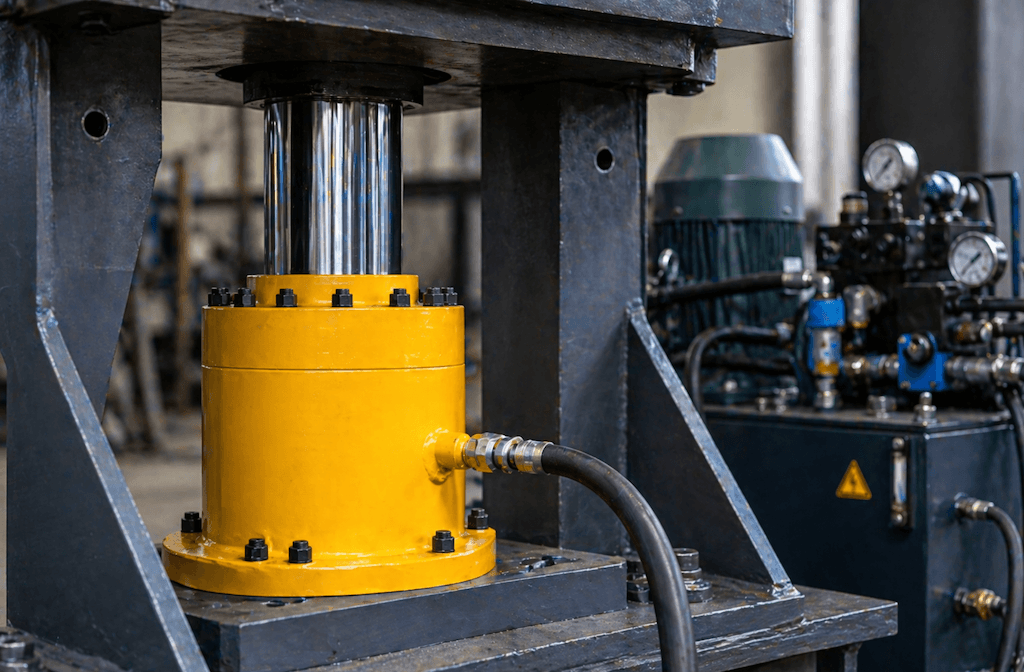
Pascal’s law states that pressure exerted onto any point of enclosed liquid transmits equally into all directions. In simple terms, when pumping the handle of a jack, we make the hydraulic fluid move from the reservoir into the main cylinder of the tool. It pushes the piston upwards and lifts the load placed on its top.
Among the different kinds of jacks used in industrial settings, the hydraulic version stands out for its strength and reliability. Thanks to the check valve, the liquid does not get back to the reservoir, so the weight stays elevated during work. For lowering the load, the release valve is opened, thus the hydraulic fluid returns to the reservoir and the piston moves down.
Hydraulic Jacks Types
The selection of lifting devices depends solely on the industrial equipment that needs to be raised. Coastal Hydraulics has experience with several types of hydraulic jack, and we frequently assess the different types of jacks available to match specific lifting requirements:
Bottle Jacks
Such jacks have a form of vertical cylinder similar to milk bottles. These devices have tremendous lifting capabilities and a very small size. Therefore, professionals often use such jacks for emergency repairing of structural elements of buildings by sliding them under the element that needs to be elevated.
Also, they’re used for raising hydraulic presses and other bulky equipment. In situations where extra power and stability are needed, a machine hydraulic jack can be an ideal solution for handling large industrial machines safely.
Floor Jacks
Trolley or floor jacks also include castors. Such design helps to roll the jack to the exact place needed. This tool allows for easily placing it under the load. The low height allows using such jacks in places where machinery is located very close to the ground surface. For particularly heavy lifting, a hydraulic pressure jack provides additional force and control, making it suitable for demanding industrial environments.
Scissor Jacks
Most of the scissor jacks are just mechanical. However, hydraulic ones allow raising heavy equipment at a precise level. Due to the crisscross mechanism, it raises and holds the machine steadily at a certain height thanks to hydraulic pressure. We find this type of jack very helpful when assembling complicated structures.
High Lift Jacks
For some machines, it is necessary to create the gap between the machine and ground to get access to certain parts. High-lift jacks have extended cylinders and thus allow for lifting machinery to greater heights than regular ones. Professionals use such jacks for servicing heavy factory machinery.
Farm Jacks
This type of tool got its name because of its common use in agriculture. Nevertheless, such jack performs great work on rough industrial terrain. In addition to being suitable for lifting equipment, it can also be used for pulling or pushing it. Thus, professionals use it for the stabilization and movement of big agricultural machinery.
Making Your Equipment Safe to Lift
We must emphasize that safety is our first priority when lifting heavy equipment at Coastal Hydraulics. The correct selection of jacks prevents the possibility of accidents and expensive damages. Since such tools contain pressurized liquid, they should be serviced properly to ensure proper work. Contact our team if you need qualified assistance with the maintenance or repair of lifting equipment!
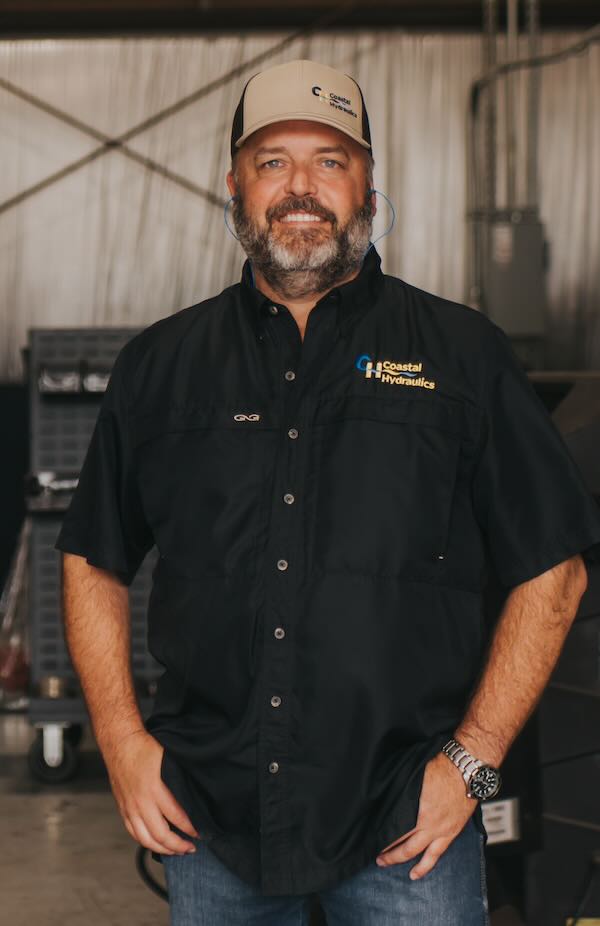
Wayne Rodick is the owner and founder of Coastal Hydraulics, a company built on the principle of “Speed to Recovery.” A U.S. Navy veteran, Wayne developed extensive hydraulic expertise while maintaining F-18 fighter jets, where precision, reliability, and rapid service were critical. Today, he brings that same commitment to excellence to the hydraulic repair industry, leading a team dedicated to delivering fast, dependable repairs that minimize downtime and keep equipment operating at peak performance.