
Last Updated on October 1, 2026 by Wayne Rodick
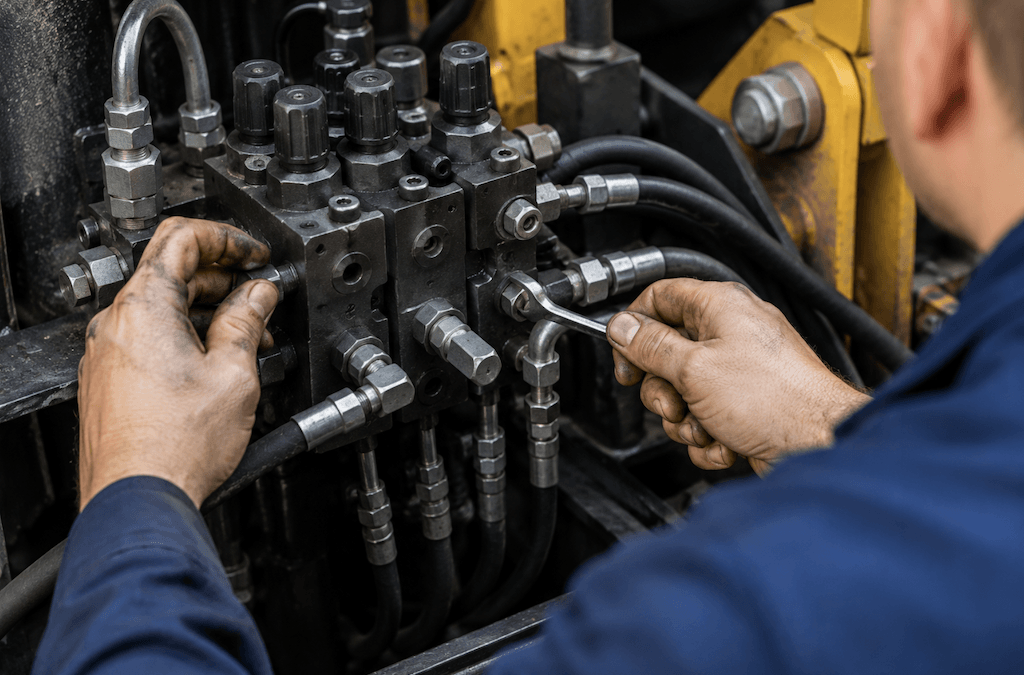
Hydraulic systems keep heavy machinery moving, and the flow control valve sits right at the heart of that. We work on these valves constantly at Coastal Hydraulics, and we’ve watched a single faulty one shut down an entire operation. Knowing how they function is the first real step toward keeping your equipment running the way it should.
Why Hydraulic Flow Control Valves Matter in Industrial Systems
A hydraulic system moves power through pressurized fluid. How fast your actuators run – cylinders, motors, and the like – comes down to how much fluid actually reaches them. A hydraulic flow control valve manages exactly that. It regulates the rate of fluid flow inside a hydraulic circuit, which gives operators tight control over the speed and force of moving parts.
Skip proper flow regulation and machinery turns unpredictable. Actuators might move too fast, which creates a safety risk, or crawl along and drag down your productivity. A flow control valve acts as an adjustable gatekeeper in the circuit, and that small bit of control makes a big difference.
How Hydraulic Flow Control Valves Regulate Fluid Movement
Restricting Fluid Flow to Control Actuator Speed
At its most basic, a flow control valve introduces a restriction into the fluid path. Narrow that path and less fluid gets through in a given moment, so the actuator downstream slows down. Think of partially closing the nozzle on a garden hose. The pressure hasn’t changed, but the smaller opening limits how much water comes out.
In hydraulic systems, that restriction usually comes from a variable orifice – a gap you can widen or shrink. Smaller orifice, slower actuator. Simple as that.
Maintaining Constant Flow Despite System Pressure Changes
There’s a catch with basic restriction, though. System pressure rarely holds steady. Loads shift, pressure fluctuates, and the flow rate through a fixed orifice wanders right along with it. Understanding the hydraulic flow control valve working principle here is key: pressure-compensated valves handle this by adjusting the orifice size on their own, holding a consistent flow rate no matter what pressure is doing upstream or down.
A Closer Look at the Four Main Valve Types We Work With
1. How a Needle Valve Provides Fine Flow Adjustment
A needle valve relies on a tapered, needle-shaped plunger that slides in and out of a matching seat. Turn the adjustment knob and the needle moves forward or back, changing the gap fluid has to squeeze through. These valves are remarkably precise, so they’re a natural fit wherever you need fine-tuned speed control. We reach for them often in test rigs and calibration equipment, where accuracy really is everything.
2. How an Orifice Plate Creates a Fixed Flow Restriction
An orifice plate is about as straightforward as hydraulics get: a disc with a precisely sized hole drilled through the middle. Fluid pushes through that fixed opening, producing a predictable pressure drop and flow rate. There’s nothing to adjust, and that’s the whole point – consistency. We recommend them for circuits that need a set flow rate and won’t see much change in conditions over time.
3. How a Priority Valve Directs Flow to Critical Functions First
A priority valve makes sure one circuit, usually a safety-critical one, gets the flow it needs before anything else gets a drop. The valve reads downstream pressure and only opens a secondary port once the priority circuit is satisfied. As a flow control hydraulic valve, it’s designed so that steering systems on mobile equipment always take precedence – steering has to come first no matter what the rest of the machine is doing.
4. How a Pressure-Compensated Valve Maintains Consistent Flow Rates
A pressure-compensated flow control valve carries a built-in compensator spool that reacts to pressure differences across the main orifice. When upstream pressure climbs, the spool shifts to shrink the effective orifice and hold your target flow. When pressure drops, it opens back up. That self-regulating habit makes these valves the obvious pick for jobs with shifting loads, like injection molding machines and industrial presses.
FAQs
What Causes A Hydraulic Flow Control Valve To Fail?
Contamination, seal wear, and cavitation damage lead the list. Dirty fluid can clog orifices or score internal parts, and worn seals let fluid leak internally, which throws off the accuracy of your flow regulation.
Can A Flow Control Valve Be Repaired, Or Does It Need Replacing?
Plenty of the time we can rebuild one – new seals, a thorough cleaning, and a reset of the adjustment mechanisms. That’s the approach we take with the repair of hydraulic control valves for industrial equipment, and it works well in most cases. But once you’ve got scored bores or a damaged compensator spool, replacement is usually the honest answer.
How Often Should Hydraulic Flow Control Valves Be Serviced?
Inspect them at every scheduled hydraulic service interval. Bump that up if you notice erratic actuator speeds, odd noises, or a circuit that’s running hotter than it should.
Keep Your Hydraulic System in Control
Flow control valves are small parts with a large say in how your system performs. Understanding how they work helps us diagnose faults faster and hold tighter tolerances on your equipment. If yours is behaving inconsistently, get in touch – we’ll track down the cause and get you running again.

Wayne Rodick is the owner and founder of Coastal Hydraulics, a company built on the principle of “Speed to Recovery.” A U.S. Navy veteran, Wayne developed extensive hydraulic expertise while maintaining F-18 fighter jets, where precision, reliability, and rapid service were critical. Today, he brings that same commitment to excellence to the hydraulic repair industry, leading a team dedicated to delivering fast, dependable repairs that minimize downtime and keep equipment operating at peak performance.