
Last Updated on September 8, 2026 by Wayne Rodick
Few things wreck a hydraulic system as thoroughly as cavitation, and few things get misunderstood as often. We’ve spent years doing hydraulic repair and installation at Coastal Hydraulics – including hydraulic pump rebuilding services in Houston – and in that time we’ve watched cavitation slowly kill pumps that had no business failing early. The maddening part is that most of the damage never had to happen. Once you understand what’s going on inside the system, you can usually stop it.
Here’s what this post covers: how cavitation actually works, the causes we run into most on the job, and the warning signs your team should never ignore.
What Is Hydraulic Pump Cavitation?
The Physics Behind Vapor Bubble Formation and Collapse
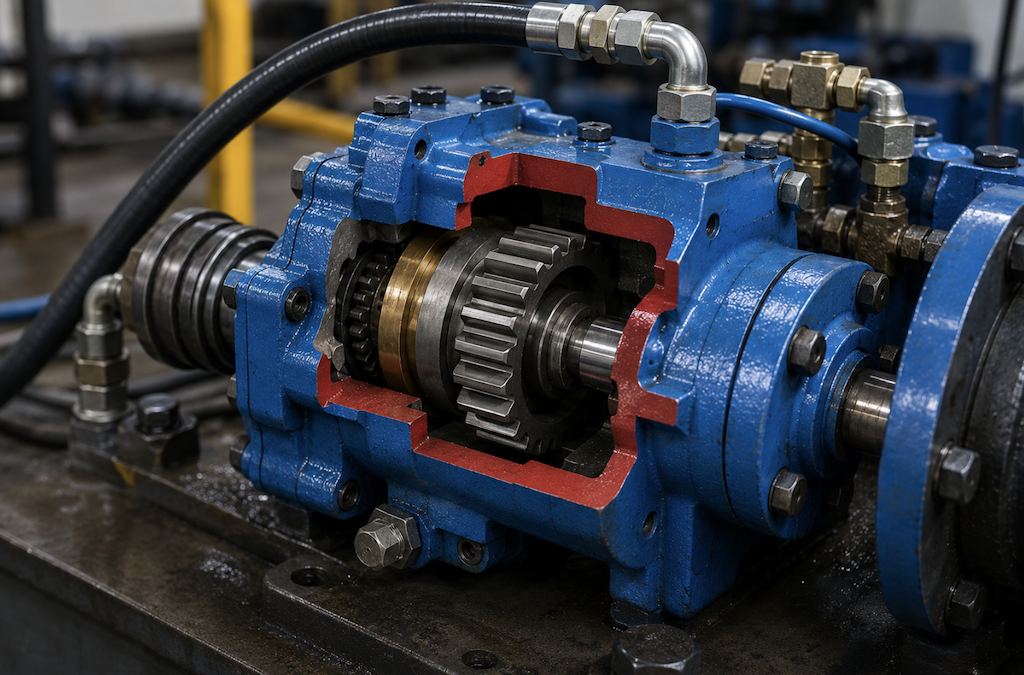
What is cavitation on a pump? It happens when pressure inside the system drops below the vapor pressure of the fluid. When that happens, the fluid boils. Not because it’s hot, but because the pressure gave out. Tiny vapor-filled bubbles form in the liquid, ride along with the flow, and then hit a high-pressure zone where they collapse. Hard.
Each of those little implosions releases a surprising amount of energy in a very small spot. Repeat that thousands of times, and you get eroded metal, pitted pump housings, and internal parts wearing out way faster than normal mechanical stress would ever cause. That’s the sneaky thing about cavitation. It starts invisible and keeps chewing away long before anyone notices something’s wrong.
The Most Common Causes of Hydraulic Pump Cavitation
Inadequate Fluid Supply and Low Reservoir Levels
The simplest cause is also one of the easiest to avoid: not enough fluid in the reservoir. When levels drop too low, the pump can’t pull the supply it needs, and you get a partial vacuum at the inlet. That’s all cavitation needs to get going. Checking reservoir levels is basic stuff, but on a busy job site, it’s exactly the kind of thing that slips through the cracks.
Inlet Line Restrictions and Clogged Suction Filters
Anything that chokes the suction line is a problem. Clogged filters, kinked hoses, undersized inlet lines. They all add resistance and drop pressure before the fluid ever reaches the pump. Understanding cavitation causes in pumps starts here – more times than we can count, cavitation damage on an older system traces straight back to a suction filter nobody ever changed. Keeping those inlet pathways clear is about the cheapest insurance you’ll find.
Elevated Fluid Temperatures and Reduced Viscosity
Run hydraulic fluid too hot, and it thins out. Thin fluid struggles to hold the pressure film that protects your internal parts, and it has a higher vapor pressure too, so it cavitates more easily under the same conditions. We see this most in systems pushing heavy loads for long stretches without enough cooling to keep up.
Pump Speed Exceeding System Design Limits
Every pump has a speed range it’s rated for. Push past it, and the pump tries to move more fluid than the inlet can actually feed it. You end up short on pressure at the inlet, and cavitation follows. Among the less obvious pump cavitation causes, this one usually shows up after somebody modifies a system and bumps the pump speed without touching the inlet side to match.
Air Leaks in Suction Lines
Air sneaking in through loose fittings, cracked hoses, or worn seals can cause aeration, sometimes called pseudo-cavitation. It’s technically a different thing, but the damage works much the same way: bubbles form, bubbles collapse, surfaces erode. Air leaks are a pain to track down because they often don’t leave any visible sign on the outside.
Worn Pump Components and Internal Leakage
Pumps loosen up as they age. Worn pistons, damaged valve plates, tired seals. All of that lets fluid bypass internally, which drags down efficiency and throws off the pressure balance the pump depends on. That internal leakage can open up low-pressure pockets where cavitation takes hold, even when the system looks fine from the outside.
Warning Signs That Cavitation Is Occurring in Your Hydraulic System
Noise, Vibration, and Fluid Discoloration
The classic tell is a high-pitched whine or rattle coming off the pump. It doesn’t sound like normal operation, and it usually brings extra vibration with it. Performance drops off too. The system gets sluggish or won’t build to full pressure. Pop the cover, and aerated fluid often looks foamy or milky. In the bad cases, you’ll see pitting and cratering right on the housings and internal parts.
Frequently Asked Questions
Can Cavitation Damage A Hydraulic Pump Permanently?
Yes! Let it run long enough, and you get irreversible erosion on housings, pistons, and valve plates. Bad cases mean replacement, not repair. Catch it early with noise checks and routine fluid inspections, though, and you cut the odds of permanent damage way down.
How Do We Know If Cavitation Or Aeration Is Causing The Problem?
When diagnosing a cavitation hydraulic pump issue, the symptoms help narrow it down: cavitation tends to make a sharper, more metallic whine, and it usually ties back to inlet restrictions or low fluid. Aeration gives you a spongy, inconsistent response and foamy fluid, and it points toward air getting in through suction fittings or seals. Check both the inlet side and the fluid condition, and the source usually becomes clear.
How Often Should Suction Filters Be Inspected To Prevent Cavitation?
Inspect them at every scheduled maintenance interval, which for most applications lands somewhere between 500 and 1,000 operating hours. Dusty or high-contamination environments? Check more often. A clogged filter is one of the most preventable causes of cavitation we deal with.
Protecting Your Hydraulic System Starts with Understanding the Cause
Cavitation almost always gives you warning before it does real harm. The damage is serious, but the causes behind it are nearly always something you can manage with solid maintenance and a well-designed system. Whether we’re chasing down a struggling pump or setting up a brand-new installation, hydraulic pump cavitation prevention is part of the conversation from the start.
Seeing any of these symptoms in your system? Don’t wait for it to get worse. Contact our team at Coastal Hydraulics for a professional hydraulic system assessment. Stepping in early saves your equipment, your uptime, and your budget.
Wayne Rodick is the owner and founder of Coastal Hydraulics, a company built on the principle of “Speed to Recovery.” A U.S. Navy veteran, Wayne developed extensive hydraulic expertise while maintaining F-18 fighter jets, where precision, reliability, and rapid service were critical. Today, he brings that same commitment to excellence to the hydraulic repair industry, leading a team dedicated to delivering fast, dependable repairs that minimize downtime and keep equipment operating at peak performance.