

Last Updated on June 23, 2026 by Wayne Rodick
The first step in the upkeep and maintenance of your equipment is the step which requires the least amount of work, and it is to the check hydraulic fluid levels. Hydraulic fluids running low are not in a position to generate the required pressure for the operation of the equipment. This means that the equipment would eventually require costly repair if this step is not followed.
We have seen many a piece of equipment come into our shop because the level of the hydraulic fluids was not checked by the operator. The good news is that this simple upkeep requires mere minutes, thus saving the operator thousands in equipment repair.
Safety First: Prepare Your Equipment
The very first thing that needs to be done is ensuring that the equipment is safe enough to work on. This means the engine needs to be turned off, and the hydraulic fluids need to be cool enough to handle. This is because the pressure inside the equipment is extremely high, and this would cause burns if the hydraulic fluids come into contact with the skin.
In addition, the safety locks need to be engaged, and the equipment parts which are elevated need to be lowered because they contain pressure inside them. Gloves and safety glasses need to be worn, as the hydraulic fluids can cause irritation.
Locating the Reservoir and Taking a Reading
The first step in doing this is finding your reservoir tank that has your dipstick or your sight glass. Normally, you will find your reservoir tank near your hydraulic pump. When you want to see your fluids in your dipstick system, you are supposed to pull out your dipstick, wipe, and put it back and pull it out again. Knowing how to check hydraulic fluid level correctly also involves ensuring that, for a sight glass system, you look into the transparent portion located on the side of your tank. The fluids will be visible in this portion of your tank.
When to Call a Professional
There are situations where you notice low fluids in your equipment, and this could be a cause for concern. One of these situations is when you notice that you keep having to add more fluids into your equipment. In this case, you can be sure that you have a leakage problem in your equipment. The leaks could be in your hoses, your seals, and your connections.
We have also seen situations where the fluid level goes down due to problems with internal components of the equipment, like a pump or cylinder. When you notice unusual sounds and your fluid looks milky and foamy, please contact us and we will help you with your problem at Coastal Hydraulics. If you need expert assessment, our hydraulic testing service near Houston is ready to help.
Keep Your Machinery Running Strong
Fluid level checks are one of the easiest and most effective methods for extending the lifespan of the equipment. We recommend that you check the fluids before each shift, or at least once a week, depending on the level of use for the equipment. This not only extends the lifespan of the equipment, but you are guaranteed that the equipment is running smoothly without any interruptions. Checking hydraulic fluid levels regularly ensures optimal performance. If you are not aware of the condition of the equipment, please don’t hesitate to contact us for assistance!
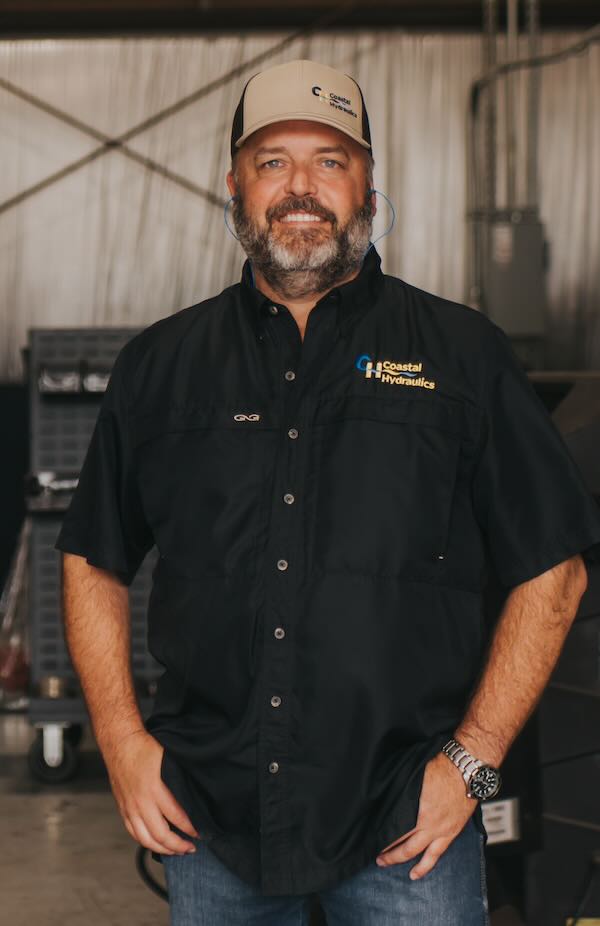
Wayne Rodick is the owner and founder of Coastal Hydraulics, a company built on the principle of “Speed to Recovery.” A U.S. Navy veteran, Wayne developed extensive hydraulic expertise while maintaining F-18 fighter jets, where precision, reliability, and rapid service were critical. Today, he brings that same commitment to excellence to the hydraulic repair industry, leading a team dedicated to delivering fast, dependable repairs that minimize downtime and keep equipment operating at peak performance.