
Last Updated on October 1, 2026 by Wayne Rodick
It takes great power to raise tons of weight, dig through earth, and move objects impossible for humans to lift. Fluid mechanics provide that power to make life easier for everyone. At Coastal Hydraulics, we see the importance of fluid power every day, especially when it comes to hydraulic pump repair. The heart of each hydraulic system is the hydraulic pump, which makes everything possible.
Components of the Hydraulic Pump
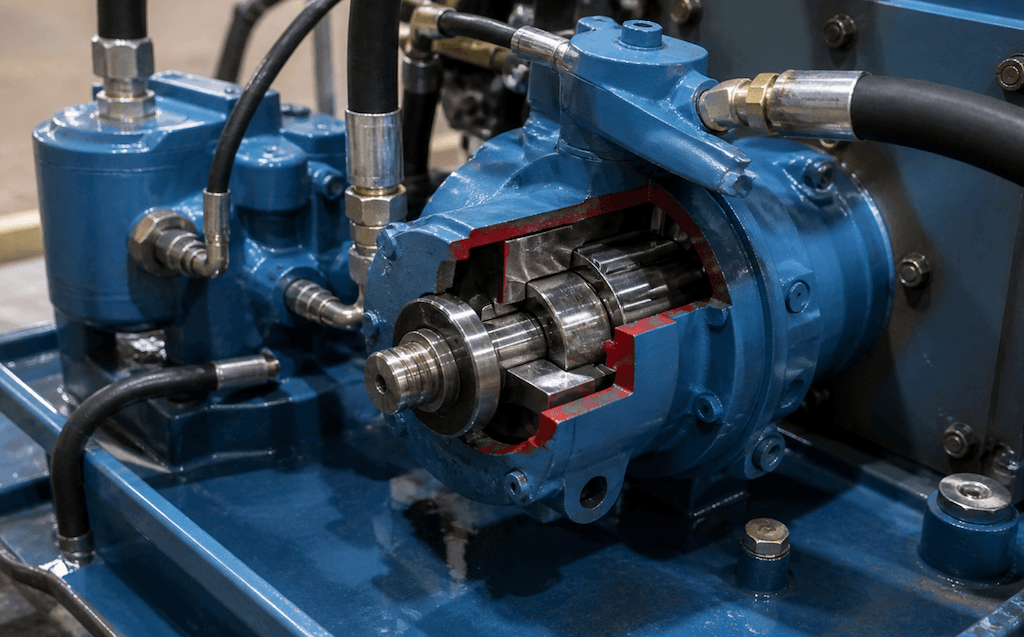
Each time a customer brings a malfunctioning piece of equipment to our facility, we examine its main components. The outer casing serves as a protection layer and holds the internal elements and pressurized fluid. The internal mechanisms of the hydraulic pump may include gears, vanes, or pistons. There is also a drive shaft that connects the pump to a motor or diesel engine.
Seals and bearings allow for easy rotation of the rotating components while keeping the fluid inside the pump. If you’ve ever wondered, how do hydraulic pumps work? It all comes down to the precise coordination of these mechanisms. One faulty element can cause the entire system to fail.
Hydraulic Pump Principles of Operation: Creating Flow Instead of Pressure
While people tend to think that these devices create hydraulic pressure, the pumps produce flow. Pressure appears as a result of resistance encountered by the flowing fluid in the hydraulic circuit. The movement starts when the shaft rotates the rotating elements. It generates a partial vacuum inside the pump chamber. As a result, the atmospheric pressure forces the hydraulic fluid to move from the storage tank into the inlet line and then the pump chamber. If you find yourself asking – a hydraulic pump, how does it work? – this fundamental explanation covers the core concept.
Afterward, the inner mechanisms trap the fluid and send it through the outlet port into the hydraulic circuit. The continuous rotation pushes the fluid into the system. If you’re interested in the working of hydraulic pump, it relies on this process of drawing in, trapping, and pressurizing fluid to perform useful work. When it meets resistance in the form of a load or a closed valve, the pressure increases enough to overcome the resistance. Our experienced technicians work with determination to adjust the pressure levels as needed to ensure smooth operation.
Importance of Hydraulic Pumps in Different Industries
Fluid power powers multiple industries, including manufacturing, mining, aerospace, and others. Hydraulic pumping is essential in construction, where hydraulic pumps power excavators and bulldozers used for digging and lifting construction materials. The agriculture sector uses these devices in tractors and harvesters. They help farmers plant crops, harvest crops, and distribute grains. Manufacturers utilize them in machines for metal shaping and assembling. We repair various equipment from different industries to demonstrate their importance.
Hydraulic Technology Future Trends
The future belongs to smart sensors and innovative designs that allow for greater efficiency. However, even the most advanced hydraulic pump needs proper maintenance to function without issues. You risk stopping your production due to a failure if you do not service the system. When you notice unusual noises, reduced fluid flow, or fluid leakage, it is better to bring your equipment to Coastal Hydraulics. Our qualified technicians have the required skills and instruments to restore the hydraulic fluid pumps and maintain your operations!
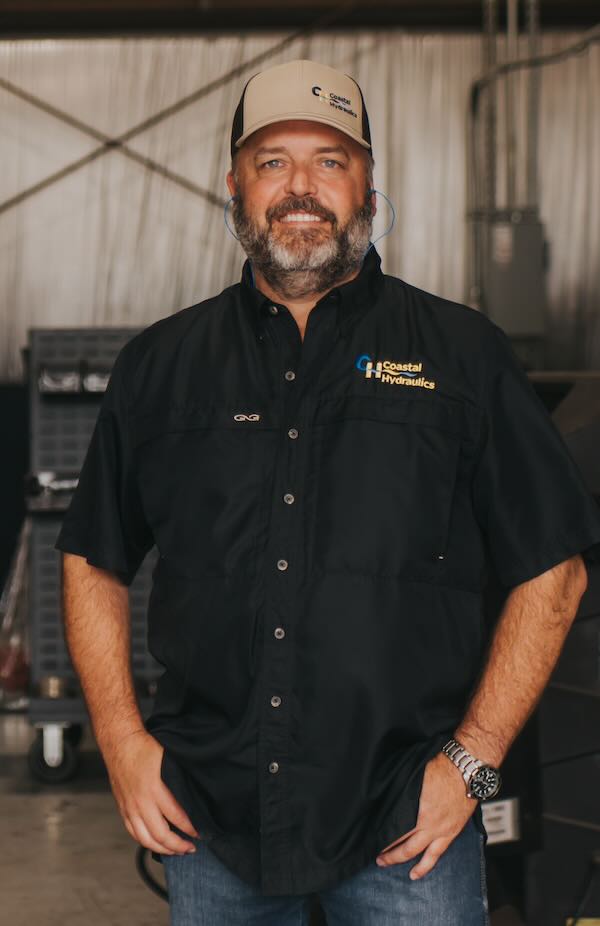
Wayne Rodick is the owner and founder of Coastal Hydraulics, a company built on the principle of “Speed to Recovery.” A U.S. Navy veteran, Wayne developed extensive hydraulic expertise while maintaining F-18 fighter jets, where precision, reliability, and rapid service were critical. Today, he brings that same commitment to excellence to the hydraulic repair industry, leading a team dedicated to delivering fast, dependable repairs that minimize downtime and keep equipment operating at peak performance.