
Last Updated on October 1, 2026 by Wayne Rodick
When you are working around heavy machinery and industrial equipment, the hydraulic system is like your muscles. The fluid in your hydraulic lines is like your lifeblood. As hydraulic specialists, we see many hydraulic failures every day that could have been prevented if someone had simply taken a good look at your hydraulic fluid color.
A question we get asked a lot by our clients at Coastal Hydraulics is about the appearance of the fluid. Some people who run hydraulic systems will tell you that all hydraulic fluids look the same. However, the truth is that this is not the case. The color of hydraulic oil is a good indicator of the nature of the fluid, where it comes from, and, most importantly, the current state it is in.
Unraveling the Meaning of Hydraulic Fluid Colors
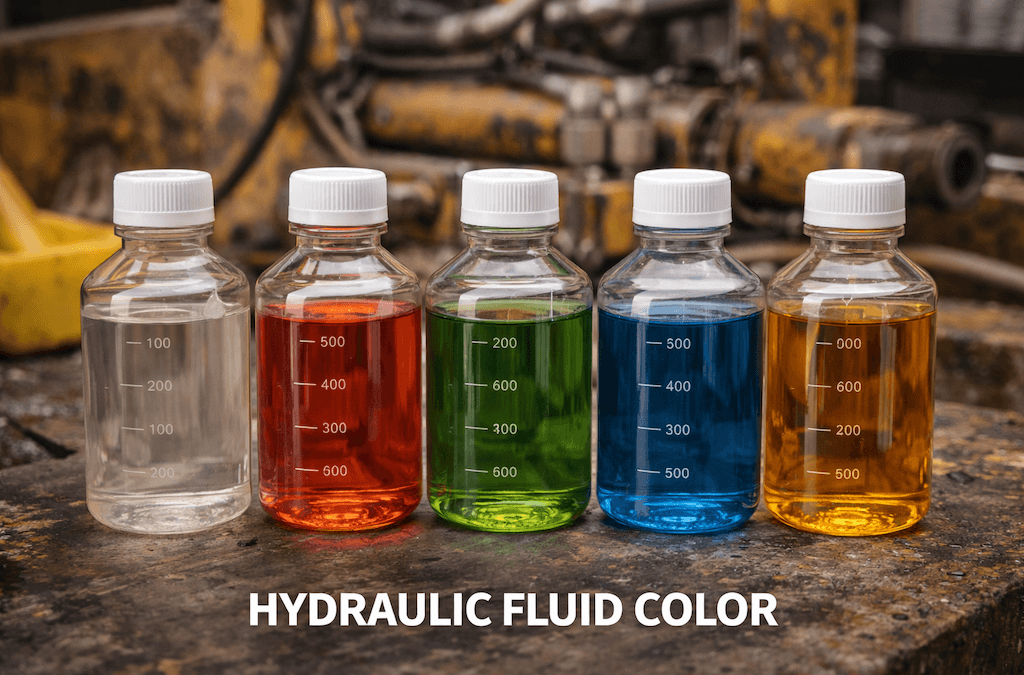
New hydraulic fluid is typically a light, clear amber or golden-colored liquid. This is the normal expected hydraulic oil color for the mineral oils right out of the drum. But there are other colors you would see as you get into the different additives.
We often see red fluid in various systems. This is usually Automatic Transmission Fluid (ATF), which may be used in a hydraulic system, or it may be a fire-resistant fluid. In other cases, the manufacturer may color their specialty fluid blue or green to make it easily distinguishable from the regular mineral oil used in a system, as well as for leak detection against the grease and grime found in a machine.
However, it is the colors of concern that you need to be aware of, and those are the colors of contamination. When we look inside the system and observe milky or cloudy fluids, it is an automatic red flag. This milky coloration is almost always an indication of water contamination. Water can ruin the lubricating characteristics of the fluids and cause rust in the pumps and valves. Again, when the fluids turn dark brown to black and give off the scent of burning, it is an indication of excessive heat in the system, causing the fluids to oxidize.
Distinguishing Between Fluid Types
The color may also indicate the chemical composition of the fluid. Most of the hydraulic systems we repair contain mineral-base fluids. These are products of crude oil refinement and are similar in chemical composition to motor oils. They are economical and provide excellent lubricating capabilities, which explains their popularity in most machinery. They usually begin with a golden amber color, as has been mentioned.
The hydraulic fluids are synthesized in a way that they meet particular properties. We recommend the use of synthetic hydraulic fluids in situations where the temperatures are extreme or in situations where the pressure is high and the use of mineral oil will lead to degradation. Synthetic hydraulic fluids are synthesized in a way that they are resistant to oxidation and fire. Due to their similarity in appearance to mineral oil, dyes are used in the synthetic fluids to avoid mixing.
Applications and Usage
We recommend to our clients to choose fluid according to application rather than focusing only on cost. Mineral fluids are the backbone of the fluid power market. These fluids will be present in everything ranging from excavators, bulldozers, to hydraulic lifts, and dump trucks.
On the flip side, we have the use of synthetic fluids as well as fire-resistant fluids in specific industrial environments. For instance, in a steel mill or die-casting plant where open flames or high temperature sources exist, mineral oil can be disastrous in the event of a leak. In such environments, we have no choice but to use water-glycol fluids or phosphates. These fluids may be costlier and require close monitoring when it comes to maintenance.
Keep Your System Healthy
Your hydraulic fluid’s condition determines how long your equipment will last. As a reminder, we suggest that you incorporate a daily or weekly visual check into your routine. Rather than simply checking your level, you need to inspect your hydraulic fluid by looking at it on the dipstick or in your sight glass – what color is the hydraulic fluid? If the fluid does not appear as expected, this could indicate underlying issues.
If the color change has progressed from a clean gold or red to a milky white or black of the consistency of sludge, it’s time to clean the system. Don’t ignore the signs. It will result in the failure of the pump. If you are not certain of the meaning of the color of your fluid, contact us for hydraulic services at Coastal Hydraulics!

Wayne Rodick is the owner and founder of Coastal Hydraulics, a company built on the principle of “Speed to Recovery.” A U.S. Navy veteran, Wayne developed extensive hydraulic expertise while maintaining F-18 fighter jets, where precision, reliability, and rapid service were critical. Today, he brings that same commitment to excellence to the hydraulic repair industry, leading a team dedicated to delivering fast, dependable repairs that minimize downtime and keep equipment operating at peak performance.