

Last Updated on October 1, 2026 by Wayne Rodick
Nothing slows down manufacturing like a failed hydraulic cylinder. When you’re looking at downtime, speed is important, but accuracy is more so. When you order a replacement cylinder based on estimates or guesses, more often than not, you’re left with something that doesn’t fit.
At Coastal Hydraulics, we encounter this problem quite often. Customers call inquiring about a replacement, but without knowing the proper sizes, we cannot ensure that it will fit properly. Knowing how to measure a hydraulic cylinder is a basic skill that will end up saving you time and money in the long run. Whether it’s a replacement tie-rod cylinder or a custom-welded part, getting it right the first time is crucial in getting your equipment operational again.
Basic Guide to Hydraulic Cylinder Measurements
Cylinder measurement may seem like no big deal, but there are certain hydraulic cylinder measurements we have to consider in order to determine which part is needed.
Step 1: Measure the Bore
First, you need to measure the bore. This refers to the inside diameter of the cylinder barrel. You can measure the inside diameter of the cylinder if it’s taken apart. Otherwise, you may need to measure the outside diameter of the cylinder and the thickness of the cylinder wall, though the most effective method would be to measure the diameter of the piston.
Step 2: Measure the Rod Diameter
Then, measure the rod diameter. This is merely the thickness of the chrome-plated piston rod protruding from the cylinder. It is very important to use a caliper at this point, as any variation may imply a difference in the load rating.
Step 3: Measure the Stroke Length
Stroke length is the distance that the rod travels from the full retract to full extension. This can be determined by subtracting the retract length of the cylinder from its extension length. In cases where the cylinder is damaged and cannot extend, you can turn to the instructions provided by the manufacturer.
Step 4: Measure the Retracted Length
Finally, take the retracted length of the cylinder, also known as the pin-to-pin length. This refers to the length measured from the center of the mounting pin hole in the base end of the cylinder to the center of the pin hole on the rod end of the cylinder when it is in the closed position.
Tips for Accurate Hydraulic Cylinder Measurements
The above steps provide the basics, but through years of repairing hydraulic systems, there are some tricks we’ve learned to guarantee accuracy.
Use the Right Measuring Tools
It is always best to use the proper tool for a particular job. A tape measure is adequate for rough stroke measurements, but it is never accurate enough for rod or bore sizes. A digital caliper or a micrometer is always our best recommendation for such critical measurements. A margin of error on a rod measurement could be disastrous if an incorrect seal kit is selected.
Clean the Cylinder Before Measuring
You should clean your cylinder before you begin. Hydraulic environments tend to be dirty environments. Grease, dirt, or rust could interfere with your readings. Make sure you clean your rod and your barrel so that your calipers sit flush on your metal.
Verify the Port Size and Orientation
Verify the size of the ports and their orientation. Although not a physical dimension of the action of the cylinder, it is important to know the size and type of the ports in order to reconnect. Verify whether the ports in question are NPT, SAE, and/or BSPP ports.
Getting Your Equipment Back to Work
Measuring a hydraulic cylinder will eliminate the guesswork of repairing and replacing the system. You will be assured that once you purchase a new one or have it repaired, you will get the exact one that your system requires.
But if you ever are struggling with measuring cylinder sizes or your cylinder has some unique ways of mounting, do not hesitate to contact our team at Coastal Hydraulics. We are here to assist you in confirming your information and getting your business up and running.
If your shop is looking for hydraulic testing in Houston, our team is ready to support your needs!
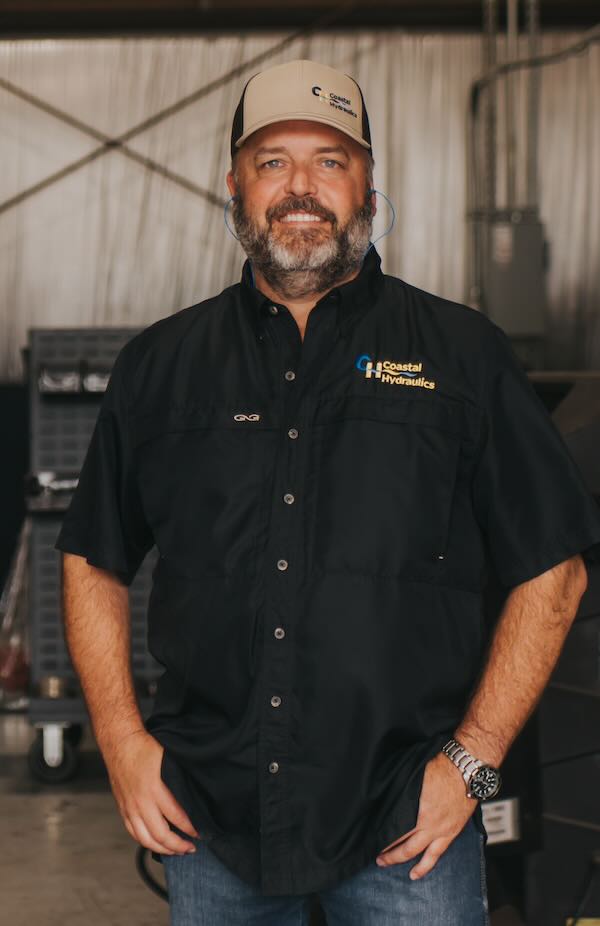
Wayne Rodick is the owner and founder of Coastal Hydraulics, a company built on the principle of “Speed to Recovery.” A U.S. Navy veteran, Wayne developed extensive hydraulic expertise while maintaining F-18 fighter jets, where precision, reliability, and rapid service were critical. Today, he brings that same commitment to excellence to the hydraulic repair industry, leading a team dedicated to delivering fast, dependable repairs that minimize downtime and keep equipment operating at peak performance.