

Last Updated on June 23, 2026 by Wayne Rodick
Every time when we take care of hydraulic systems, we admire their impressive power that seemingly comes from nowhere. In reality, there are many rules and laws that make such mechanisms work the way they do. It is the science called hydraulics that helps to generate, regulate, and transmit power with the help of some liquids under pressure. When considering hydraulic control valve repair, it is important to understand the elements responsible for managing this power, which are the following:
- Directional control valves control the way a liquid moves through the system, directing it towards a particular cylinder or a motor depending on the case. Directional control valves change their position using spools that open and shut some ports.
- Pressure control valves help to protect the system by releasing an excess liquid when it occurs. The main task of pressure control valves is to send an excessive liquid to the reservoir before it leads to some damage in lines or seals.
- Flow control valves limit or increase the rate of liquid passing through them so that they would be able to control the rate of movement of cylinders. This helps a lot in providing the exact movement needed.
What Are Valves and Fluid Control in Hydraulics?
Fluid control in hydraulics involves the usage of numerous mechanisms that make the hydraulic fluid operate according to a set program. How do hydraulics work? The first and the most important thing in hydraulic systems is the pumping mechanism. It creates a flow of fluid needed to create pressure against some resistance. While moving further through different valves, this fluid gets into actuators.
There are two types of actuators: cylinders and motors. While a linear actuator (cylinder) pulls or pushes something, a rotary actuator (motor) creates rotational movement for driving wheels and drills. If you’ve ever wondered, how does a hydraulic system work? It is also worth mentioning that fluid is one more crucial component of such a system, and its quality and type affect the way actuators function.
Maintenance and Troubleshooting Tips
Based on our experience in servicing different machines and repairing hydraulic components at Coastal Hydraulics, we can say that proper maintenance of the system is what prevents any possible breakdown. Actually, the main source of problems with valves is the contamination of fluid. Some impurities such as dirt, water, and other particles can destroy valve spools and pump very fast. Understanding the principles of hydraulics is key to identifying these issues early and maintaining optimal system performance.
We recommend performing filter replacement and fluid sampling regularly. In case of any problems, such as whining sounds from pumps, sluggish movements of cylinders, or leakage, contact our team right away. Finding even a small problem with fluid pressure may help save a whole pump.
Keep Your Hydraulic Equipment in Excellent Condition
So, as you can see, valves and fluid control mechanisms are vital components of any hydraulic system. When thinking about hydraulic control valve function, it becomes clear that if these components perform their roles correctly, then the mechanism is working properly. With a better understanding of how valves and control mechanisms of fluid operate, it is possible to significantly extend the life of your equipment. Feel free to contact us in any case!
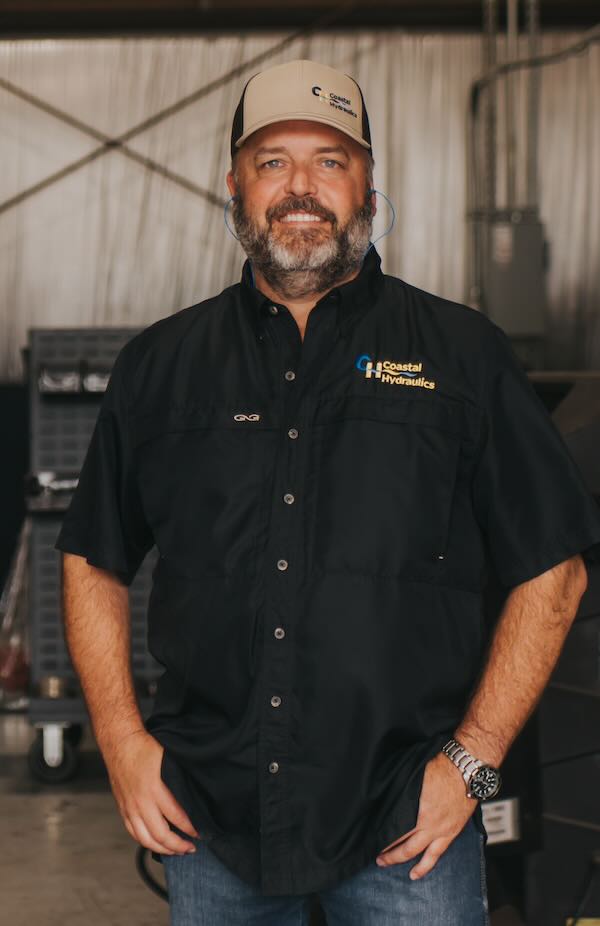
Wayne Rodick is the owner and founder of Coastal Hydraulics, a company built on the principle of “Speed to Recovery.” A U.S. Navy veteran, Wayne developed extensive hydraulic expertise while maintaining F-18 fighter jets, where precision, reliability, and rapid service were critical. Today, he brings that same commitment to excellence to the hydraulic repair industry, leading a team dedicated to delivering fast, dependable repairs that minimize downtime and keep equipment operating at peak performance.