

Last Updated on October 1, 2026 by Wayne Rodick
Your hydraulic cylinders are the muscles of your heavy equipment machines. If they go down, your whole business will be brought to a standstill. We know that while we always recommend that you have complex units such as yours repaired at a hydraulics repair shop in Houston, like Coastal Hydraulics, sometimes you may need to take steps yourself.
If you choose to do any sort of disassembly yourself, it is important to follow the correct procedure to avoid endangering yourself as well as the equipment. We have dealt with the disassembly of thousands of cylinders and have come up with a procedure on how to disassemble a hydraulic cylinder efficiently. This tutorial will walk you through the procedure that we follow to disassemble hydraulic cylinder units. Whether you want to disassemble your hydraulic cylinder or just learn our process, keep reading!
Safety First in the Shop
Safety is never an option at Coastal Hydraulics, and it shouldn’t be in your plant either. Prior to using your trusty wrench, you must be absolutely sure that the hydraulic system is depressurized. Fluid under pressure can spew out at very high velocity, and it might very well end up in your body, causing you serious harm. Lock out your machinery to prevent it from moving when you are working on it.
In addition, you need to have the right Personal Protective Equipment available. You cannot start your tear-down without your safety glasses, steel-toed boots, and oil-resistant gloves, to name a few. Furthermore, you need to prepare your work environment. This is because hydraulic work is inherently messy, and you need to be equipped with a catch pan to deal with oil spills and absorbent materials. This is particularly true because a slippery floor can be a hazard, especially when working with large steel components.
The Disassembly Process
The first step that we have to do is secure our cylinder on a tear-down bench. If you don’t have a tear-down bench, you can also use heavy-duty strap wrenches or nylon slings. One important consideration that you have to remember is that you can’t secure your cylinder using a vice or a pipe wrench on your cylinder barrel and chrome rod. The teeth on these instruments will crush your cylinder and chrome rod.
Next, remove the port plugs and drain the oil in your preferred pan. Stroking the rod out and back will help force the oil from the barrel. Once the oil has been removed, you should be able to remove the gland or head. A cylinder may have its gland or head threaded, screwed on, or held in place with a retaining ring. A spanner wrench would be required for a threaded gland.
Once the gland is released, it is possible to pull out the rod assembly slowly from the barrel. This is one of the most delicate procedures which requires lots of patience. It is important to ensure that one is holding the rod as it comes out of the tube. This is because the heavy piston can cause scratches on the honed surface of the barrel if it comes into contact with the barrel’s threads.
In-Spec and Clean Components
After the hydraulic cylinder disassembly of the unit, it is important to inspect the unit. We examine the chrome rod for any pitting, scratches, or bending. In case there are any defects in the chrome rod, the seals will fail immediately. It is important to inspect the barrel using a flashlight to ensure there are no scores.
Cleaning involves the use of a solvent that is compatible with your hydraulic fluid. We clean all the metal parts to remove the sludge and dirt, and then we dry the parts using compressed air. It is crucial to ensure that you do not use shop rags that leave lint. The lint will clog the valves and orifices when the system is repressurized.
Tips for a Successful Reassembly
Putting the cylinder back together is a very delicate operation. Replacing the entire seal package and not just the seals themselves is a must. The primary reason for recurring failure is the reuse of the seals. It is very important to liberally lubricate the new seals with new fluid prior to install. The seals should not snag, twist, or rip during the install.
As you put the piston back into the barrel, you may have to employ the help of the piston ring compressor or the sizing sleeve. This is done in order to ensure that the seals are put in without pinching and that the new seals are not damaged, in case you push the piston into place.
Keeping Your Equipment Running
Dismantling a hydraulic cylinder is not a difficult process, provided you have the required tools and take the time to do so. Safety, however, is and always should be your number one concern when working on any project. If you find yourself in a situation where you have severe scoring, bent rods, and damage you cannot repair, then it is time to seek the services of a professional. We hope that this tutorial has helped you in completing the process.
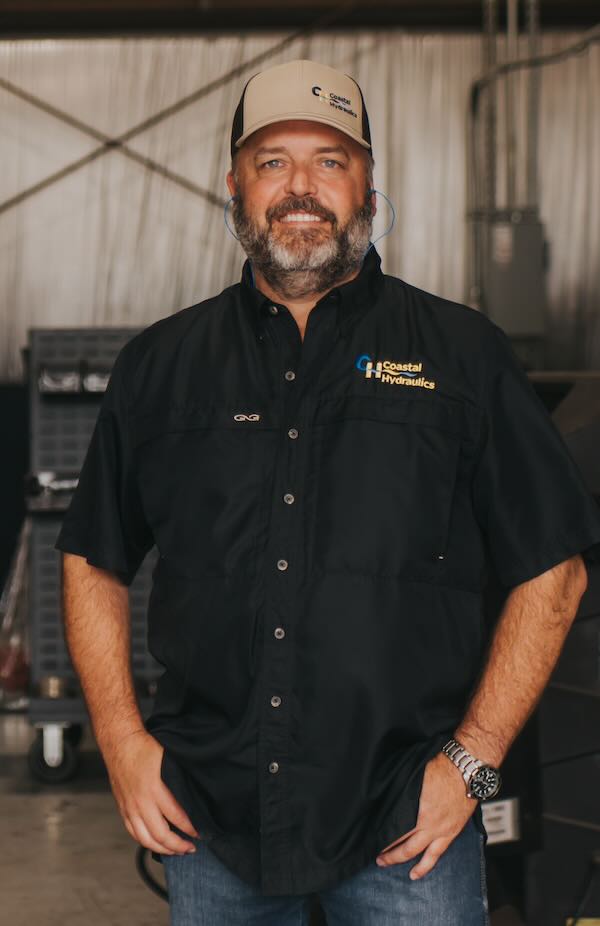
Wayne Rodick is the owner and founder of Coastal Hydraulics, a company built on the principle of “Speed to Recovery.” A U.S. Navy veteran, Wayne developed extensive hydraulic expertise while maintaining F-18 fighter jets, where precision, reliability, and rapid service were critical. Today, he brings that same commitment to excellence to the hydraulic repair industry, leading a team dedicated to delivering fast, dependable repairs that minimize downtime and keep equipment operating at peak performance.