

Last Updated on June 23, 2026 by Wayne Rodick
In taking care of any type of engine, it can be just as important to pay attention to the little details. There are many different pieces of the engine that are very important in keeping it in the best condition possible. Hydraulic valve lifters are just one of these pieces. If you need expert assistance, contact us today at Coastal Hydraulics for professional support.
If you’re aware that you are hearing the sound of that distinctive ‘tick,’ it means you need to go back and work on correcting the hydraulic valve lifters. Understanding how to adjust hydraulic valve lifters and being able to put them back in the right working condition can be very advantageous when it comes to regaining that smooth operation and sound of your engine. Here is what you need to do:
Tools of the Trade
Before taking on this project, it is important to prepare the necessary tools. In this way, it will be much easier and safer. In addition to having the right wrench and socket toolkit, it is important to have access to the right feeler gauge and screwdriver. For those new to adjusting valves with hydraulic lifters, it would also be important to have some towels for cleanliness. The final and most important step in preparing for this project is to ensure that you are in possession of the service manual for the engine you’re working on.
How to Make Changes
Firstly, you have to prepare the engine and let it cool down. Then, you have to remove the valve tops in order to gain access to the hydraulic lifters. Next, turn the engine until the piston of the cylinder you are working on reaches the top of its compression stroke, top dead center (TDC), and ensure that the timing marks are in the correct positions and that the intake and exhaust valves for that cylinder are closed. If you are adjusting hydraulic lifters for the first time, take extra care to follow each step closely. Also, don’t be afraid to contact pros if you’re in any doubt at all.
Next, turn loose the lock nut on the rocker arm adjuster. Now, you can utilize your screwdriver and turn the adjuster nut and inspect the clearance between the rocker and the valve stem by means of the feeler gauge. Your objective is to get to “zero lash,” meaning that you should get the rocker and the valve stem in contact and that you don’t push the lifter at all.
Now that you are at that point, turn the adjuster nut another specified turn, say a quarter turn to a full turn, depending on what is indicated in the service manual of the engine you are working on. That specified turn of the adjuster nut preloads the lifter. Then, hold the adjuster nut in place and secure it down tightly with the rocker arm lock nut. Do this for each of the cylinders specified in the engine manual.
How Our System Makes Maintenance Easier
Though it may be possible for some individuals to carry out the adjustment of hydraulic valve lifters on their own, it is still work that requires care and accuracy. For those who may choose to have others carry out the work on their engines for them, our hydraulic repair services are the best of the best. Our professionals have the necessary equipment and sufficient experience to perform a hydraulic lifter adjustment for you in no time. Our experts are capable of adjusting every single piece back to its factory settings to give you optimal engine performance and life.
Keep Your Engine Running Smoothly
Hydraulic valve lifters that are calibrated just right play an essential role in ensuring the smooth and soundless functioning of every engine. Now, with the help of this guide or some professional experts, you can say goodbye to that annoying noise for good and get back on the right track when it comes to the well-being of your engine. And if you are to do it on your own, never forget to go to the user manual for specific steps and considerations. For those in need, help is just around the corner at Coastal Hydraulics!
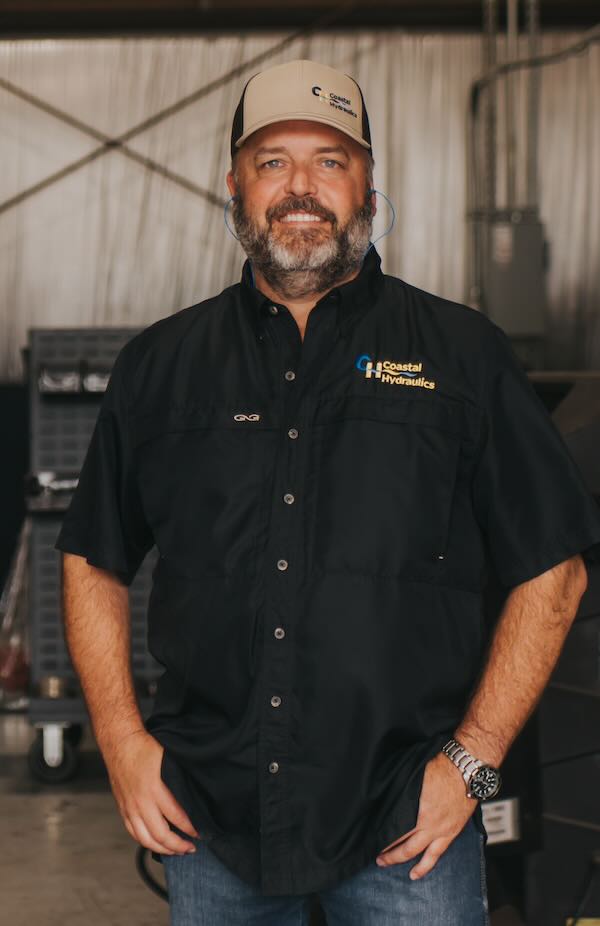
Wayne Rodick is the owner and founder of Coastal Hydraulics, a company built on the principle of “Speed to Recovery.” A U.S. Navy veteran, Wayne developed extensive hydraulic expertise while maintaining F-18 fighter jets, where precision, reliability, and rapid service were critical. Today, he brings that same commitment to excellence to the hydraulic repair industry, leading a team dedicated to delivering fast, dependable repairs that minimize downtime and keep equipment operating at peak performance.