
Last Updated on October 1, 2026 by Wayne Rodick
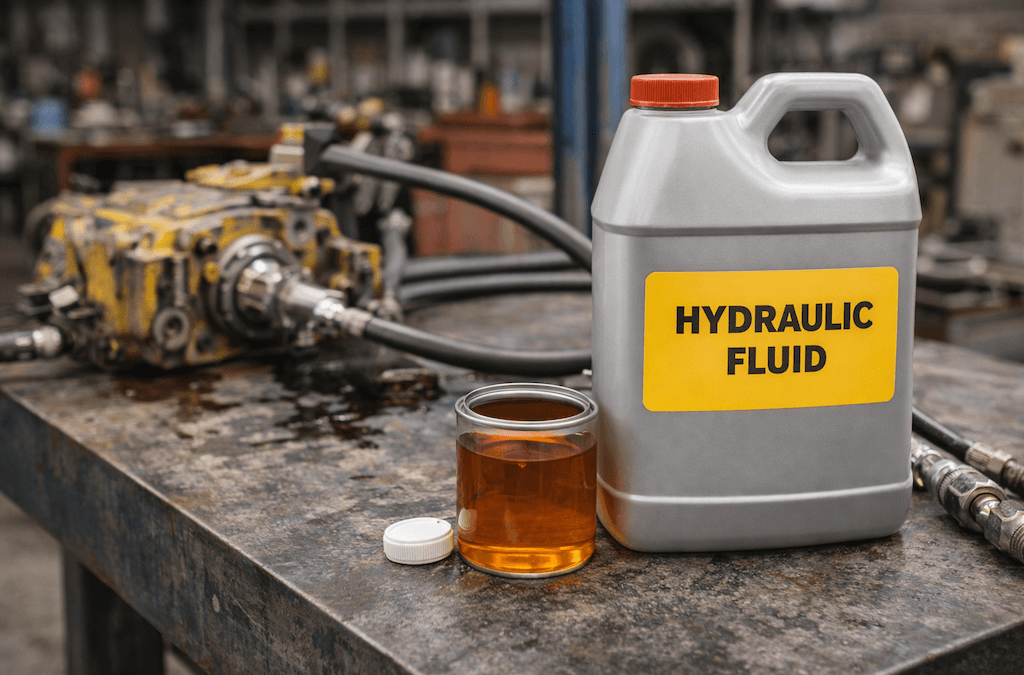
Hydraulic fluid is undoubtedly the lifeblood of a hydraulic system. As a repair specialist, our trusted services at Coastal Hydraulics see systems come into our facility all the time with problems which could have easily been prevented by using the correct fluid. It can be considered a medium of energy transfer, a lubricant for moving components, a seal, and a cooling agent for a system. Using incompatible fluids can lead to oxidation, corrosion, and complete component failure.
To provide a high level of machine longevity, one must first understand the different kinds of hydraulic fluid available. Although different kinds of additives exist, the most basic kinds include petroleum based, water based, synthetic, and vegetable based. What are the 4 types of hydraulic fluid?
These are the categories you should know
1. Mineral-Based Hydraulic Fluids
Mineral hydraulic fluids, which are otherwise referred to as petroleum fluids, represent by far the most common fluid type we come into direct contact with in our field. Among the many types of hydraulic fluid used today, these are obtained from refining oil and are generally considered to be a standard fluid in most industries because of their effectiveness.
The manufacturers normally incorporate additives into these fluids to improve their performance. Some additives you will see added to base oil include anti-wear additives, rust inhibitors, and defoamers. Such fluids are very effective in protecting pumps and motors from wear. The major disadvantage with these fluids is that they can be considered an environmental hazard in case of a leak because they are flammable and can be poisonous.
2. Water-Based Hydraulic Fluids
In situations where safety is a major factor, especially in terms of resistance to fires, different types of hydraulic fluid – particularly water hydraulics fluids – are usually recommended. Such fluids have a high concentration of water, which gives them an added characteristic of resisting fires. Usually, these fluids can be observed in industries such as mining and/or die-casting.
Although they are very effective in protecting against fires, water-based fluids have some drawbacks. They have a potential to evaporate when subjected to higher temperatures, and they do not provide a good level of lubrication protection when compared to mineral oil. Such fluids require very close attention in systems to avoid corrosion and bacterial accumulation in filters and valves.
3. Artificial Hydraulic Liquids
Synthetic hydraulic fluids are artificially produced lubricants. They are chemically formulated to function effectively in harsh environments where mineral oil can break down. They are formulated for heavy-duty applications that work under high pressure and/or harsh temperatures. Examples include phosphate esters and polyol esters.
The major benefit in this case is stability. Synthetics do not oxidize with ease and are able to withstand high temperatures without an appreciable increase in viscosity. They work well in the case of fire resistance too. They are, however, much costlier than mineral oil. Furthermore, they are not compatible with all sealing materials. We have observed a number of instances where using synthetics led to increased swelling or cracking of standard seals.
4. Vegetable Oil-Based Hydraulic Fluids
With an increase in environmental regulations, a trend towards vegetable oil fluids is being observed. Biodegradable and derived from a renewable resource such as canola or rapeseed oil, these fluids are a type of natural ester. Among common hydraulic fluid types, vegetable-based options are valued for their reduced environmental impact.
Such fluids can be used in machinery deployed in a delicate setting, such as a forest, an agricultural setting, or a maritime setting. In case a burst hose affects a setting such as a forest or a waterbody, damage will be minimal compared to petroleum products. Although such fluids present excellent lubricity, they are prone to oxidation when not handled appropriately, resulting in a shorter lifespan compared to synthetic fluids.
Keeping Your Systems Running Smoothly
Picking a suitable hydraulic fluid involves weighing performance, safety, and environmental issues. Whether you want a fluid with abrasive-resistant qualities, such as mineral oil, or a fluid with fire-resistance properties, such as a water-based glycol fluid, you need to make an educated decision for your fluid’s benefit. Our team is ready to assist you if you are not sure which fluid you need, or if you think you have a problem with your fluid!

Wayne Rodick is the owner and founder of Coastal Hydraulics, a company built on the principle of “Speed to Recovery.” A U.S. Navy veteran, Wayne developed extensive hydraulic expertise while maintaining F-18 fighter jets, where precision, reliability, and rapid service were critical. Today, he brings that same commitment to excellence to the hydraulic repair industry, leading a team dedicated to delivering fast, dependable repairs that minimize downtime and keep equipment operating at peak performance.