
Last Updated on October 1, 2026 by Wayne Rodick
Many industries utilize hydraulic systems as they power important machinery used on construction sites or in manufacturing plants. Such setups work due to precise fluid dynamics, which create huge amounts of energy. Having worked in the field for many years, we know how even the smallest mistake can cause severe equipment failures at Coastal Hydraulics.
Being a professional repair company specializing in Houston hydraulic system repair and maintenance, we witness the consequences of neglected systems each day. In order to prevent this situation, you need to adopt a consistent maintenance plan to prolong the working life of your equipment and ensure smooth functioning. The following guide will help you avoid expensive downtime!
Importance of a Strict Maintenance Schedule
Knowing why you should stick to a certain maintenance routine will help you understand the importance of proper management of your machinery. Parts of a hydraulic system face severe conditions, including high pressure and constant fluctuation of temperature. There are always possibilities for contamination, fluid degradation, and mechanical wear. In nearly all cases, when our experts visit the customer, they find out that the issue happened because the equipment was not maintained timely. Creating a solid checklist for hydraulic system maintenance will prevent minor fluid leaks from resulting in the catastrophic failure of pumps and other essential elements of the machinery. In doing so, you will make sure that the investment made into the equipment is not lost, and that your production schedule is protected. Regular care also creates a safer workplace by reducing the risk of bursting of any hydraulic components.Daily/Weekly Maintenance Routine
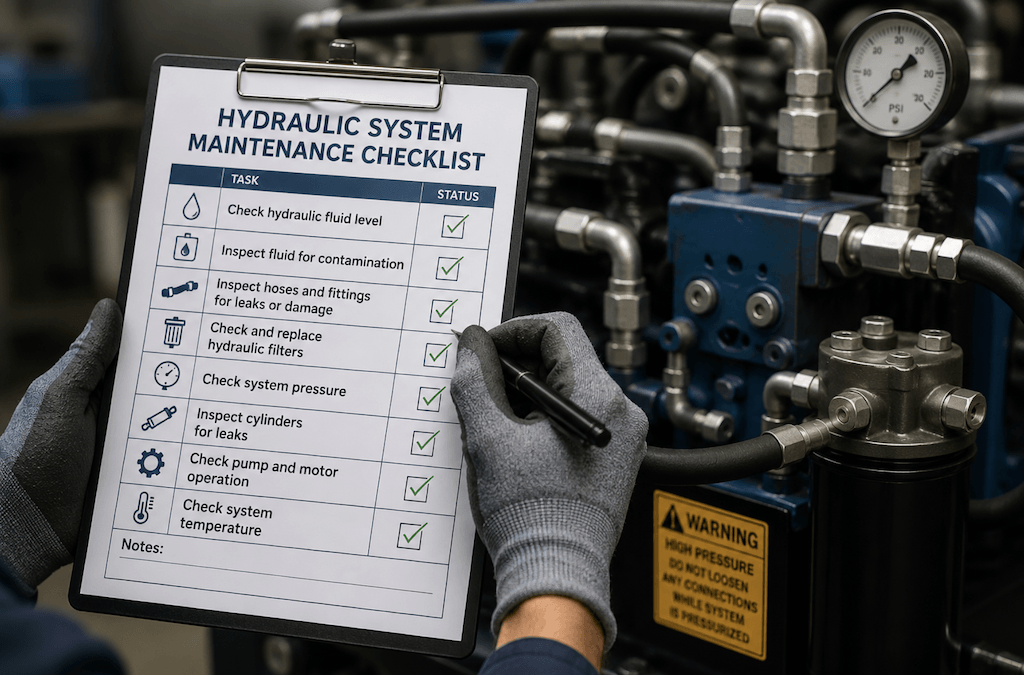
Your daily and weekly checks provide an essential foundation that will allow you to foresee the potential issues with your system. Every day, before starting your machinery, do a basic visual examination of your equipment to detect problems. Check all hoses, fittings, and cylinders for any fluid drips and wet areas. We always recommend checking the fluid level of the main reservoir to make sure that it meets all requirements mentioned by the manufacturer. Pay attention to the sound created by the motors and pumps while the system is operating. Cavitation and aeration can be detected through unusual noises, such as whining or grinding. Do not forget about keeping track of the operating temperature of the system through a special gauge. If the temperature of fluid becomes too high, it will quickly break down and damage all seals in the long run. Spending a couple of minutes once a week cleaning the exterior of your system and checking for any loose connections will help you to avoid serious troubles. Besides, a clean exterior will make any new leaks apparent instantly.Monthly/Quarterly Maintenance Routine
While your monthly maintenance involves more profound checking, quarterly inspections involve a set of additional measures necessary for ensuring the efficiency of your machinery. The health of the fluid inside your system plays a decisive role in its proper functioning. For this reason, we recommend performing a chemical analysis of the fluid every quarter as part of the maintenance of hydraulic system. It is possible to find any contaminants, including moisture and dirt, through analysis. Also, pay attention to the breather caps of the system during monthly maintenance and clean all filters. If a cap gets blocked by any means, the pump will be forced to function much harder, which will shorten its service life significantly. Check the mechanical alignment of all motors and pumps as any vibrations may cause misalignment and bearing failure. In addition, make sure that all electrical connections are tightened properly, and all mounting bolts are firmly fastened.Annual Maintenance Routine
Each year, the machinery requires a complete overhaul to make sure that it will operate flawlessly during the upcoming period of work. It is important to drain the reservoir and clean it from sludge. At the same time, we recommend replacing all filters during annual service. Also, install new hydraulic fluid with appropriate viscosity and grade recommended by the manufacturer as part of hydraulic system preventive maintenance. Check the system for any issues with pressure relief valves. You should test all of them to make sure they still work properly. We strongly recommend performing a professional audit of your system once a year. In this case, our experts at Coastal Hydraulics can conduct advanced pressure and flow testing to identify any unseen leakages inside the system.Frequently Asked Questions
How Often Should I Change My Hydraulic Fluid?
Fluid replacement period depends greatly on the operational environment and working load of your machinery. Usually, we recommend changing the fluid once in two to three years, or after two thousand hours of operation. Performing a chemical analysis of fluid will allow determining whether the time has come to change the fluid.What Are The Symptoms Of Failing Hydraulic Pump?
If the pump is going to fail soon, it will send you clear signals of malfunction. These include whining and knocking sounds coming from the system. Also, sluggish and erratic movement and responsiveness of control actuators are strong symptoms indicating problems with the pump. If the machine starts overheating rather quickly, there might be a problem with maintaining sufficient pressure.Can I Combine Different Brands Of Hydraulic Fluids?
We strongly recommend against combining hydraulic fluids produced by different companies in one system. All brands use various additives that are likely to interact poorly with each other. Mixing fluids may ruin their lubrication abilities and damage all components of the system.Maximizing Equipment Life and Performance
Maintaining your hydraulic machinery in good shape will allow enjoying numerous advantages, including efficient performance and low energy consumption. A perfectly serviced machine is capable of providing you with many years of flawless operation compared to neglected ones. We know that it might be hard to manage all of these checks since you focus mainly on production. However, we always stand ready to help you out by performing all necessary maintenance procedures!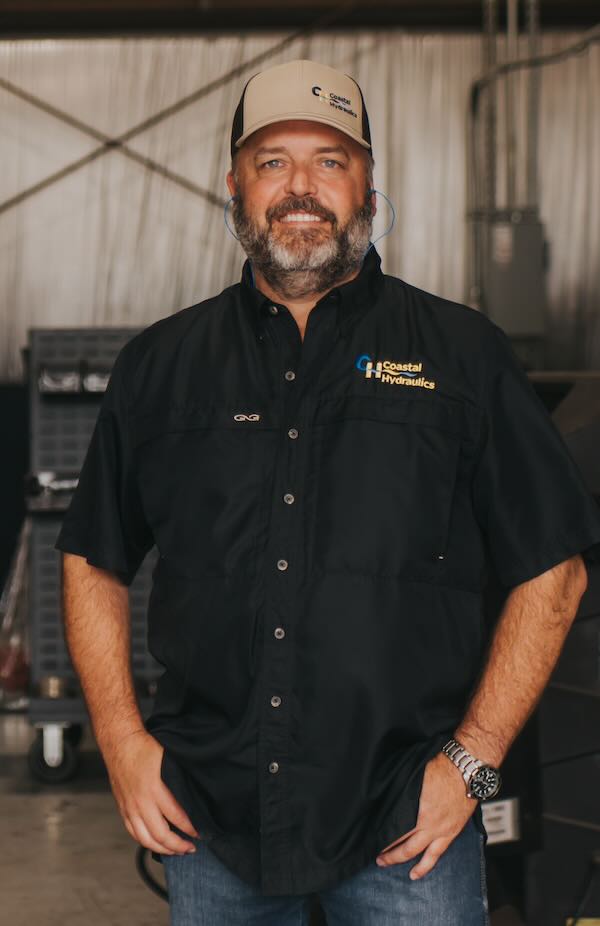
Wayne Rodick is the owner and founder of Coastal Hydraulics, a company built on the principle of “Speed to Recovery.” A U.S. Navy veteran, Wayne developed extensive hydraulic expertise while maintaining F-18 fighter jets, where precision, reliability, and rapid service were critical. Today, he brings that same commitment to excellence to the hydraulic repair industry, leading a team dedicated to delivering fast, dependable repairs that minimize downtime and keep equipment operating at peak performance.