
Last Updated on October 12, 2026 by Wayne Rodick
Ask someone to troubleshoot a hydraulic system, and they’ll usually point at the pump first. Understandable. The pump is loud; it sits right there in plain view, and it tends to take the blame whenever something acts up. But spend enough years fixing and maintaining custom hydraulic components in Deer Park and a different picture emerges. The pump isn’t where the actual work happens.
As we know at Coastal Hydraulics, that honor goes to the actuators. And this isn’t just a bit of trivia to file away. It shapes how you diagnose faults, what you prioritize during maintenance, and whether your equipment sits idle when you can least afford it.
The Actuators: Where the Work Happens
Every hydraulic system exists to get a physical job done. Lifting a bucket. Clamping a workpiece. Steering an aircraft. The parts responsible for that final, visible movement are hydraulic cylinders and hydraulic motors. Those are your actuators, and they’re the point where pressurized fluid finally turns into real mechanical force.
How Hydraulic Cylinders Convert Fluid Pressure into Linear Motion
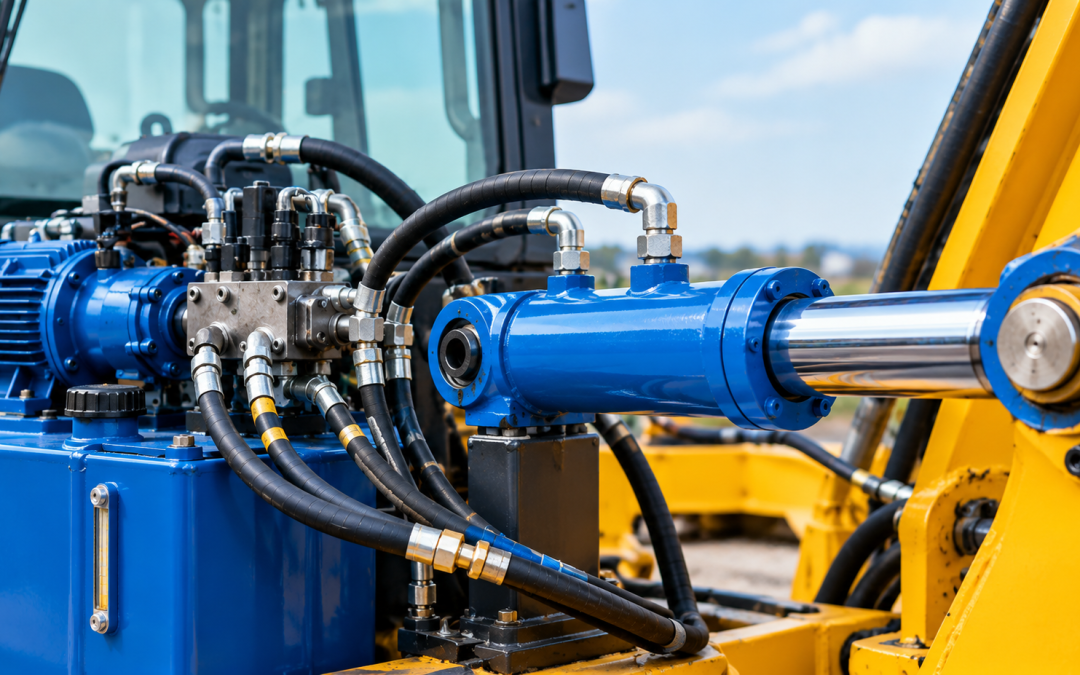
A hydraulic actuator – specifically a cylinder – takes pressurized fluid and turns it into straight-line movement. Fluid enters one side of the piston, pushes it forward, and the rod extends. Send that fluid to the other side instead, and the piston retracts. You’ll spot this on any machine that lifts, pushes, or presses. The design is refreshingly simple, which is exactly why it works so well. That said, the simplicity leans hard on two things: tight seals and clean fluid. Lose either one and the whole thing starts to struggle.
How Hydraulic Motors Convert Fluid Pressure into Rotational Motion
Cylinders give you linear force. Motors give you rotation. Fluid flow drives an internal mechanism, maybe a gear, a set of vanes, or a piston arrangement, and a shaft starts to turn. That spinning energy can then run a wheel, an auger, or a conveyor. Here’s the thing worth remembering: when a motor underperforms, the culprit is often somewhere else entirely. Which is precisely why knowing the system’s pecking order pays off.
Real-World Examples of Actuators on the Job
Actuators show up just about everywhere. On a construction site, cylinders extend excavator arms and tip dump beds. Walk through a manufacturing plant, and you’ll find them driving presses and clamps with tireless precision. In aviation, hydraulic actuators move landing gear and flight controls under tolerances that leave no room for error. Different settings, same story. The cylinder or motor is the piece finishing the job the machine was built for.
Supporting Components That Enable the Work
Of course, none of this runs on its own. There’s a supporting cast, and ignoring it is one of the most reliable ways to end up needing a repair call.
What Role Does the Pump Play in a Hydraulic System?
Which component creates hydraulic pressure? The pump generates the flow and pressure the whole system feeds on. It doesn’t do the end task itself. But without it, there’s simply no energy heading to the actuator. Call it the heart of the system: absolutely essential, just not the part doing any lifting.
How Do Valves Control Direction, Pressure, and Flow Rate?
Valves are the traffic cops. They decide where fluid goes, how much pressure builds up, and how fast everything moves through the circuit. A faulty valve can make an actuator behave in strange ways even when the actuator itself is flawless. So valves always get a close look during diagnostics.
Why Are Hoses and Fittings Critical for Fluid Transmission?
Hoses and fittings shuttle fluid between components. One leak or crack and pressure can vanish in a hurry. Plenty of so-called “mystery” performance problems trace straight back to a worn fitting rather than a failing cylinder or motor.
Why Does the Reservoir Matter for Overall System Health?
The reservoir stores fluid, lets contaminants settle, and helps shed heat. Neglect it, and you get hot, dirty fluid, which quietly chews through every other component, actuators included.
Why This Distinction Matters for Maintenance and Repair
Once you understand that actuators do the work while pumps, valves, hoses, and reservoirs make that work possible, diagnosing gets faster and a lot more accurate. When a cylinder loses force or a motor slows down, don’t stop at the actuator. Follow the whole fluid path to the real source.
It changes preventive maintenance too. Yes, protect your actuators from contamination and wear. But keep the pump, valves, and reservoir healthy as well, because they’re what deliver clean, pressurized fluid in the first place. Skip either half of that job and failures tend to arrive when you least expect them.
Frequently Asked Questions
What’s the difference between a hydraulic cylinder and a hydraulic motor?
A cylinder produces linear motion, while a motor produces rotational motion – this is the core of the linear actuator vs rotary actuator distinction. Both convert fluid pressure into mechanical force, but the type of motion they create depends on their internal design.
Can a hydraulic system work without an actuator?
No. Without a cylinder or motor, a hydraulic system has no way to convert fluid energy into usable mechanical work, regardless of how well the pump or valves perform.
What causes an actuator to lose power even if it appears undamaged?
Often, the root cause is a supporting component such as a worn valve, a clogged filter, or contaminated fluid restricting flow before it reaches the actuator.
Let Us Help Keep Your System Running
Every hydraulic system runs on a balance between the parts that do the work and the parts that make that work possible. If your equipment isn’t performing the way it should, there’s help available to figure out why, from the actuator all the way back to the reservoir.

Wayne Rodick is the owner and founder of Coastal Hydraulics, a company built on the principle of “Speed to Recovery.” A U.S. Navy veteran, Wayne developed extensive hydraulic expertise while maintaining F-18 fighter jets, where precision, reliability, and rapid service were critical. Today, he brings that same commitment to excellence to the hydraulic repair industry, leading a team dedicated to delivering fast, dependable repairs that minimize downtime and keep equipment operating at peak performance.