

Last Updated on June 23, 2026 by Wayne Rodick
Hydraulic motors play a very important role in many different applications in the industrial and mobile sectors, in that they transform the pressure of hydraulic fluid into mechanical power. Being aware of the different types of motors that are available is very important, as it will allow you to choose the right motor for your machine. When learning about Coastal Hydraulics, you’ll see that we have many years of experience in fixing and servicing such systems.
In this guide, you will learn about the construction, operation, and uses of the three hydraulic motor types: gear motors, vane motors, and hydraulic piston motors. Once you have this knowledge, you can choose the right type of motor that fits your needs.
Gear Motors
Gear motors are commonly preferred for their simplicity and economy of cost. Gear motors work on the principle of a pair of meshing gears. Fluid pressure enters the gear motor, and due to this fluid, an imbalance in fluid pressure causes the gears to turn, turning the shaft in the process.
Functionality and Applications
Because of their ease of assembly, gear motors are very reliable and can withstand higher levels of contaminants in the hydraulic fluid than any other type of motor. As one of the main types of hydraulic motors, gear motors provide steady speed and torque, making them well suited for use in applications such as materials transport, ventilators, and agricultural machinery. Gear motors are less efficient than some motors, but very rugged and inexpensive, making them very popular.
Vane Motors
Vane motors are known for offering balanced performance and efficiency. In this type of motor, the rotor has slots in which vanes can be retracted. Some motors use hydraulic fluid that, when it enters the motor, pushes the vanes, causing the rotor to turn. Other motors use compressed air that turns the rotor when it comes into contact with the vanes, which are retracted when they approach the side of low pressure.
Functionality and Applications
Vane motors are known for their smooth operation and low level of noise. They are more efficient than gear motors and can work at any range of speeds. Further, they are preferred for their applications in machines that need precision control and that run in a quiet manner, for instance, in the case of machines like injection molders and material-handling machines. They are more sensitive to fluid contaminants compared to gear motors.
Piston Motors
In situations that require high performance, piston motors are preferred. In this type of motor, the pistons are connected to a cylinder block and move back and forth. Liquid pressure pushes the pistons in alternating directions. In turn, the back-and-forth motion of the pistons translates to rotation as the pistons turn an axis that emerges in the form of an output shaft.
Functionality and Applications
In terms of torque and efficiency, piston motors are the strongest of the three. They can withstand extreme pressure and speed, making them ideal for heavy-duty applications. In fact, you can commonly spot them in construction machines, industrial winches, and boat propulsion systems. Sure, their cost is higher compared to the other two different types of hydraulic motors. Plus, you need to use very clean hydraulic fluid when using this type of motor. But this is worthwhile for many applications.
Making the Right Choice
Picking the right hydraulic motor for you depends on what you need in terms of speed, torque, efficiency, and cost. Gear motors are rugged and inexpensive for low-end applications. If you need something that is less noisy and energy-efficient for medium-duty applications, use vane motors. In tough applications that need extreme power and performance, use piston motors, which are the very best for those kinds of tasks. If you are struggling to solve or replace any of your motors, our professionals at Coastal Hydraulics are always at hand for assistance.
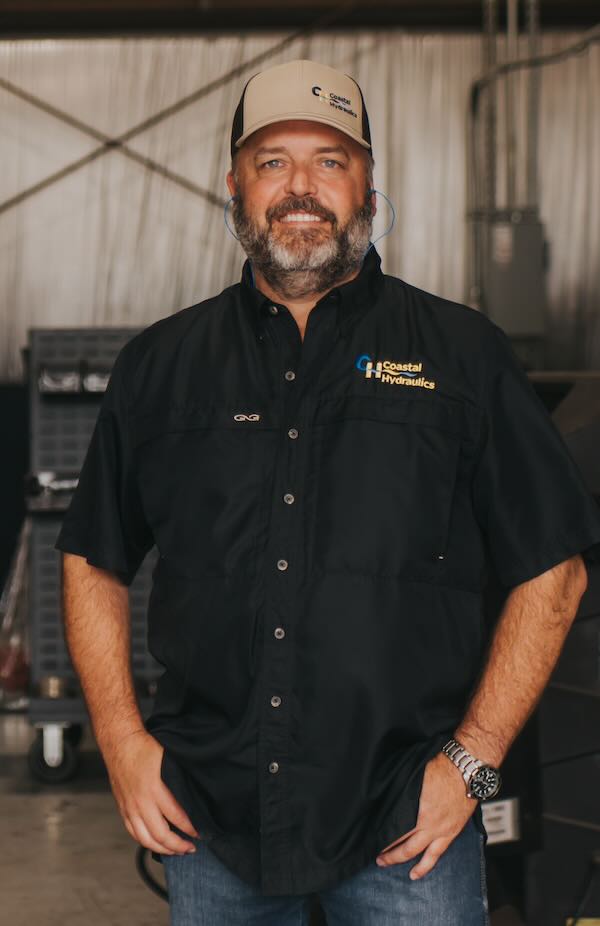
Wayne Rodick is the owner and founder of Coastal Hydraulics, a company built on the principle of “Speed to Recovery.” A U.S. Navy veteran, Wayne developed extensive hydraulic expertise while maintaining F-18 fighter jets, where precision, reliability, and rapid service were critical. Today, he brings that same commitment to excellence to the hydraulic repair industry, leading a team dedicated to delivering fast, dependable repairs that minimize downtime and keep equipment operating at peak performance.