
Last Updated on October 1, 2026 by Wayne Rodick
Hydraulic systems are used to power some of the most important machinery around the world, and these machines can be found in all kinds of industries, from construction to manufacturing to even the aviation industry and the automotive industry. We, specializing in Houston hydraulic repairing services, see how these machines function even in extreme conditions and understand how important it is to know about the basic concept of hydraulic pressure.
How Does Hydraulic Pressure Work?
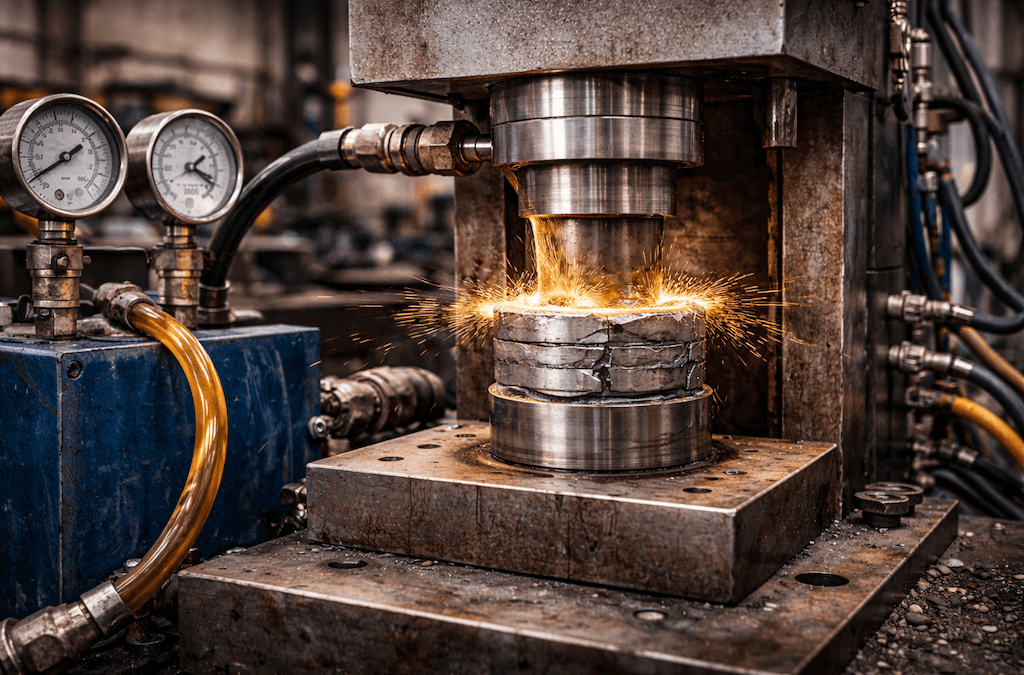
In order to understand the workability and functionality of hydraulic pressure, let’s take a look and understand the basic premise on which this entire system works. How does a hydraulic press work, for example? Well, the entire system works on a basic law that was laid down centuries ago. This isn’t to say the basic components that make up this entire system and help it function according to this law aren’t precise and accurate.
The Foundation: Pascal’s Law and Fluid Power
The basic concept on which hydraulic pressure works is based on a law that has been termed as Pascal’s law. The law states that the pressure that is applied on a fluid that is confined will be transmitted equally in all directions. In other words, it can also be explained as follows: the pressure that is applied on the fluid in any particular direction will be transmitted equally in all directions.
How does hydraulic pressure work? It states that if a certain amount of pressure is applied on the fluid in a particular direction, it will be transmitted equally in all directions.
How Hydraulic Systems Convert Pressure to Power
In any normal hydraulic system, there are three major components that function together as a single unit. These components are the pumps, the valves, and the cylinders. Understanding the hydraulic pressure working principle behind these elements is key to keeping machinery efficient and reliable.
When it comes to hydraulic problems, what is really being addressed is the manner in which the pressure flows. The pump sucks in the fluid, which is then pumped at a high pressure into the system. As the fluid enters the cylinder, it presses on the piston. The manner in which the piston is pressed will be in relation to the fluid and the area of the piston.
The Relationship Between Force, Pressure, and Area
The way in which the three elements interact with one another is quite simple. This is expressed mathematically as: Pressure = Force / Area. As such, the way the application of force is multiplied is in the use of different cylinder sizes in the same system.
In other words, if a force of 100 pounds is applied to a piston that has a small area, or a surface area of one square inch, then this will create a PSI of 100. This means that the entire system will be at a PSI of 100. If this same amount of PSI is then applied to a piston that has a surface area of ten square inches, then the same amount of PSI will create a force of 1,000 pounds. As such, the hydraulic system is very efficient, especially in the application to heavy machinery.
There are many instances in which the PSI is in the thousands. The maintenance of the appropriate amount of PSI in the system is very important. If it is too little, then there is not enough force. If it is too much, then the piston will be damaged.
Why Maintenance of Hydraulic Machines Matters
As a result of understanding the way in which hydraulic pressure functions, it becomes easier to see why maintenance is so crucial. A leak in the system will not simply be a waste of the fluid; it will be a degradation of the entire system.
When a client brings us a piece of hydraulic equipment to be repaired at Coastal Hydraulics, it is not simply the individual parts that are being repaired. It is the precise relationship between the pressures that allows the equipment to function optimally. This, in a nutshell, is the beauty and the power of hydraulics: the ability to harness the simple principles of fluids and translate them into a useful force!

Wayne Rodick is the owner and founder of Coastal Hydraulics, a company built on the principle of “Speed to Recovery.” A U.S. Navy veteran, Wayne developed extensive hydraulic expertise while maintaining F-18 fighter jets, where precision, reliability, and rapid service were critical. Today, he brings that same commitment to excellence to the hydraulic repair industry, leading a team dedicated to delivering fast, dependable repairs that minimize downtime and keep equipment operating at peak performance.