
Last Updated on October 1, 2026 by Wayne Rodick
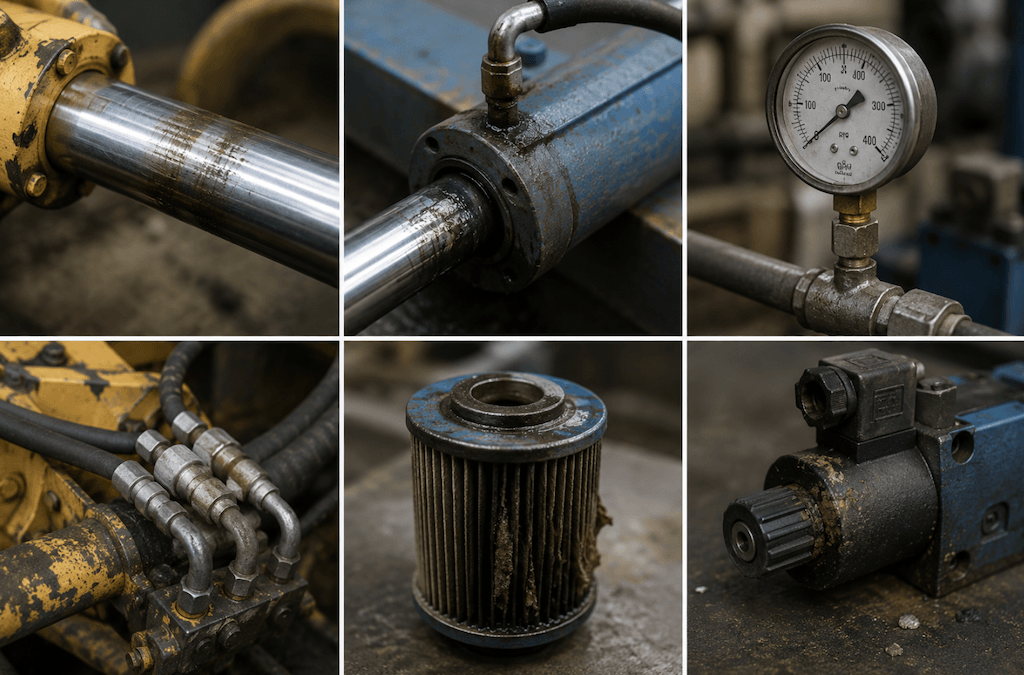
Hydraulic systems don’t usually fail with a bang. They nag. A cylinder that creeps instead of moves, a control lever gone soft, a puddle under the machine that wasn’t there at quitting time. Annoying, sure. But here’s the thing most people miss: the same few problems show up again and again. Learn those, and the whole job stops feeling like guesswork.
So let’s walk through them, with the help of our experienced technicians at Coastal Hydraulics!
1. Start with the Obvious: Fluid
Put the tools down. Check the fluid first. It’s the boring step, which is exactly why everybody skips it.- Check the level. You’d be amazed how many “major failures” are just a low reservoir. Top it off, run it, see what happens.
- Look at the color. Clear or amber is what you want. Milky means water got in. Dark and smelling burnt? It’s been running too hot for too long.
- Feel for contamination. Grit or sludge tells you something inside is wearing down, and you’ll want to deal with that before it chews through the rest.
2. Tracking Down Leaks
Leaks lie about their location. A drip pooling on the floor might be coming from a fitting a few feet up the line, riding down a hose before it lets go. So slow down and be systematic. Wipe everything dry, run the system, and watch for where the fluid comes back. A few spots worth your attention:- Hose connections and fittings – vibration loosens them over time
- Seals and gaskets, which wear out and eventually give up
- Cylinders, where fluid slips past the piston and leaks internally instead of onto the floor
3. When the System Feels Weak
Sluggish operation is probably the most common complaint, and the cause is often less dramatic than people fear. A lot of the time it’s just air in the lines. Air compresses where hydraulic fluid won’t, and that’s what gives you the spongy, can’t-trust-it feel. Bleed the air. If that doesn’t fix it, dig into these:- The pump. A worn pump can’t build pressure, and everything downstream suffers for it.
- The relief valve. Set too low or stuck open, it bleeds off pressure before the system can put it to work.
- Clogged filters. Restricted flow starves the system and mimics a dying pump almost perfectly.
4. Overheating
A hot system is a system eating itself. Heat thins the fluid, cooks the seals, and quietly shortens the life of just about everything. Usual causes: low fluid, a clogged cooler, or a machine being pushed harder than it was built for. Check the cooler for debris first – it’s quick, and it’s the kind of thing nobody bothers to look at. Old or dirty fluid? Replace it. And if the thing keeps overheating during normal work, the system might just be too small for what you’re asking of it.5. Strange Noises
Hydraulics make noise. They shouldn’t whine, knock, or rattle, though. When they do, they’re telling you something.- Whining or screeching usually means cavitation – the pump’s starving for fluid.
- Knocking or banging points to trapped air or a sudden pressure spike.
- A steady rattle can be a loose part, or a pump bearing on its way out.
A Few Habits That Help
Most of this is preventable. A little routine attention goes a long way:- Keep the fluid clean and topped off
- Swap filters on schedule, not after they fail
- Inspect hoses and seals before they let go
- Catch small leaks while they’re still small
FAQs
What Causes A Hydraulic System To Overheat?
Heat usually traces back to low fluid, a clogged cooler, or a machine working harder than it was designed to. Start by clearing debris from the cooler, then replace any old or contaminated fluid. If it keeps running hot under normal use, the system may simply be undersized for the job – and since heat thins the fluid and cooks the seals, it’s worth fixing before it shortens the life of everything else.Why Does My Hydraulic System Feel Weak Or Sluggish?
More often than not, it’s air trapped in the lines, since air compresses where fluid won’t and leaves you with that spongy feel. Bleed the air first, then check the pump, relief valve, and filters – a worn pump, a stuck valve, or restricted flow can all sap power before it ever reaches the work.How Do I Start Troubleshooting A Hydraulic System?
Begin with the fluid – check the level, color, and cleanliness before reaching for any tools. Low or contaminated fluid causes a surprising number of issues, so confirming it’s clean and topped off is the fastest way to rule out the simplest problems first. Remember, Coastal Hydraulics is here to help when you lack experience, time, or just don’t know where to start.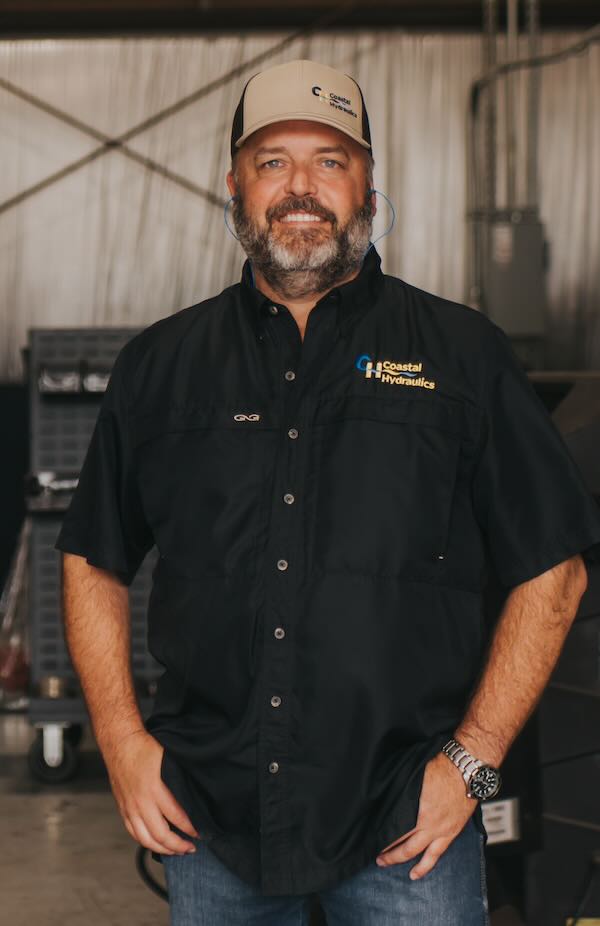
Wayne Rodick is the owner and founder of Coastal Hydraulics, a company built on the principle of “Speed to Recovery.” A U.S. Navy veteran, Wayne developed extensive hydraulic expertise while maintaining F-18 fighter jets, where precision, reliability, and rapid service were critical. Today, he brings that same commitment to excellence to the hydraulic repair industry, leading a team dedicated to delivering fast, dependable repairs that minimize downtime and keep equipment operating at peak performance.