
Last Updated on September 14, 2026 by Wayne Rodick
Hydraulic cylinder leaks are one of the most common problems we run into out in the field, and they’re rarely cheap to fix once they’ve had time to develop. A small leak seems harmless until it isn’t. Ignore it long enough, and you’re looking at a failed system, unplanned downtime, and a work site that’s suddenly a lot less safe. Here’s the upside: most leaks behave in fairly predictable ways. Work through them methodically, and you can usually track down the cause, fix it, and stop it from coming back.
This guide covers what we actually do at Coastal Hydraulics. You’ll learn about spotting the usual causes, running a proper inspection, and recognizing the point where it’s smarter to call in help.
What Actually Causes Hydraulic Cylinder Leaks?
Worn Seals and Gaskets Lead to Most Hydraulic Failures
More often than not, the trouble starts with the seals and gaskets. They take a beating over their working life – constant pressure cycling, sunlight, and long-term contact with hydraulic fluid all wear them down. Once a seal loses its elasticity, it can’t hold a tight barrier anymore, and fluid will find the gap.
If we could recommend just one habit to our customers, it would be checking your seals regularly. Nothing else prevents as much grief for so little effort – and catching the problem early means you’re less likely to find yourself searching for custom hydraulic cylinder repair near me at the worst possible moment.
Corrosion and Contamination Accelerate Cylinder Deterioration
Dirty fluid does real damage. It carries abrasive particles that scratch up the bore and the rod surface, and those scratches turn into leak paths. Add corrosion to the picture – common in cylinders that live around moisture – and the wear speeds up considerably. If you’ve noticed a hydraulic cylinder leaking on agricultural or marine equipment, this is often why: the conditions outside are simply hard to control. Keep the fluid clean, use decent filtration, and your cylinders will last a good deal longer.
Improper Installation and Maintenance Create Preventable Problems
Some leaks are entirely our own doing. Misaligned cylinders, over-torqued fittings, the wrong seal size – all avoidable, all frustrating. When a cylinder runs out of alignment, the rod takes uneven side loading, and the seals wear out well ahead of schedule. We come across this on service calls constantly, and in most cases, a careful installation would have prevented the whole thing.
Pressure and Temperature Extremes Push Systems Beyond Design Limits
Run a system past its rated pressure or temperature, and something has to give. Heat makes components expand and shift, opening up small gaps. Pressure spikes hit the seals with brief forces they were never designed to handle. If your equipment regularly works near its upper limits, don’t stretch out your inspection intervals – that’s undoubtedly where early leaks tend to hide.
How We Recommend Troubleshooting a Hydraulic Cylinder Leak
Performing a Thorough Visual Inspection Before Anything Else
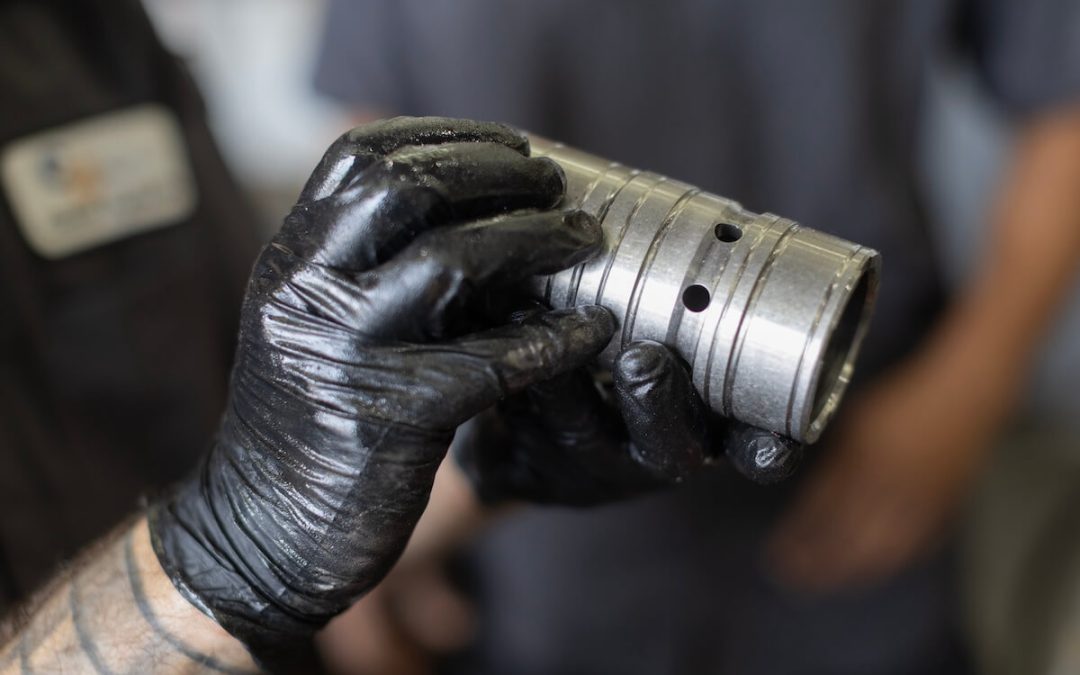
We look before we touch anything. Where a leak shows up and what it looks like usually tells us most of the story. Fluid weeping around the rod points to an external seal failure. Staining near the port fittings means a connection problem. A slick film running down the barrel suggests a crack or a porous casting.
When troubleshooting hydraulic cylinder leaks, the first step is simple: wipe the cylinder clean, cycle it slowly, and watch for the first sign of fluid – that spot is your starting point.
Using Pressure Testing to Confirm Internal Leak Pathways
Sometimes a visual check doesn’t settle it. That’s when we reach for a pressure test. Pressurize the cylinder at rest, watch the gauge, and see whether pressure drops. A drop tells us the leak is internal, somewhere between the piston seals, rather than out in the open. A leaking hydraulic cylinder can quietly cut your force output without ever leaving a puddle – which is what makes internal leaks the sneaky ones. You’ll want a reliable gauge and a controlled setup for this.
Identifying the Exact Leak Source Before Ordering Parts
Getting the diagnosis right saves both time and money. We don’t just swap every seal and hope. Instead, we combine what the inspection showed with the pressure test results and pin down the actual failure. Replace only the rod seal while the piston seal is quietly going too, and that cylinder will be back on our bench inside a month.
Recording Findings to Build a Reliable Maintenance History
Write it all down. Leak location, fluid condition, hours since the last service, whatever the gauge read during testing. On its own, one record isn’t much. Over time, though, the pattern shows up – cylinders that fail on a schedule, systems that keep getting contaminated, equipment that always runs a little hot. Good hydraulic leak detection starts here: that accumulated data is what lets you stop reacting and start planning maintenance ahead of the failure.
When It’s Time to Call Our Team for Professional Support
Not every job belongs in-house. Complex internal leaks that mean pulling the cylinder apart, seal work on high-pressure systems running above 3,000 PSI, chronic leaks that trace back to a design flaw – these are worth handing over. Hydraulic leak testing at this level requires specialist equipment and a controlled environment that most in-house setups simply don’t have.
Tackling these repairs without the right tools and hands-on experience tends to make things worse and occasionally dangerous. The Coastal Hydraulics team has the diagnostic gear and the know-how to sort these out properly the first time.
Frequently Asked Questions
How Often Should Hydraulic Cylinder Seals Be Inspected?
Every 500 operating hours is a sensible baseline, and more often if the equipment works in rough conditions. Catch seal wear early, and you keep a quick job from turning into a major repair.
Can A Hydraulic Cylinder Leak Be Temporarily Repaired On-Site?
A minor external fitting leak can sometimes be stabilized for a while. Internal or rod seal failures, though, need a proper replacement. On high-pressure systems, any temporary fix carries real safety risks – treat it as a way to shut down safely, nothing more.
What Type Of Hydraulic Fluid Helps Reduce Seal Wear?
Stick with a quality fluid the manufacturer recommends, matched to the viscosity your operating temperatures call for. Few things wear seals faster than the wrong fluid or contaminated fluid, so this is one place worth getting right.

Wayne Rodick is the owner and founder of Coastal Hydraulics, a company built on the principle of “Speed to Recovery.” A U.S. Navy veteran, Wayne developed extensive hydraulic expertise while maintaining F-18 fighter jets, where precision, reliability, and rapid service were critical. Today, he brings that same commitment to excellence to the hydraulic repair industry, leading a team dedicated to delivering fast, dependable repairs that minimize downtime and keep equipment operating at peak performance.