
Last Updated on October 1, 2026 by Wayne Rodick
Hydraulic systems are very important in running some of the most important machines in our businesses. These machines include lifting machines and manufacturing machines, many of which rely on different types of hydraulic cylinders to function effectively.
Therefore, when our hydraulic systems break down, the consequences are dire, and the effects are far-reaching. So, understanding the most common hydraulic system problems will help us detect them early, thus keeping our systems running at their best. In the following guide, let’s discuss the five major challenges that we face with our hydraulic systems and what we can do to overcome them!
Hydraulic System Problems and Solutions
1. Overheating
When our hydraulic system breaks down due to overheating, it is not only uncomfortable; it is a serious issue that affects the longevity of our hydraulic systems and the oil used in our systems.
There are a number of reasons why our systems break down due to overheating. We might be running our systems using very little oil, which makes the systems work hard, thus generating a lot of heat. We might also be running systems that are clogged, which makes the systems work harder too. At times, we might also be running our systems at full throttle, which pushes the machine to its limit. Understanding the five main problems in hydraulic system performance is crucial for effective troubleshooting and long-term maintenance, and overheating is the first.
2. Contamination
Another common problem that we face with our systems is contamination, which is a menace that we cannot afford to take lightly, especially because the contaminants, such as dirt, water, and air, are not supposed to be there in the first place.
Air contamination will result in spongy action and inefficiency. Water contamination will result in corrosion and bacteria growth in the water. Particle contamination, whether from an outside source like dirt or an inside source like parts rubbing together, is like running sandpaper on our parts. Understanding hydraulic system problems and solutions is vital for maintaining equipment efficiency and longevity.
Filtration is the first line of defense in preventing any of these contaminations. We have to make sure that the caps, seals, and filters used in our breathers are clean and that our filters are changed often. We also have to make sure that we are using the right kind of hydraulic fluid and that it is stored in an appropriate manner to keep it clean before we introduce it into our system.
3. Leaks
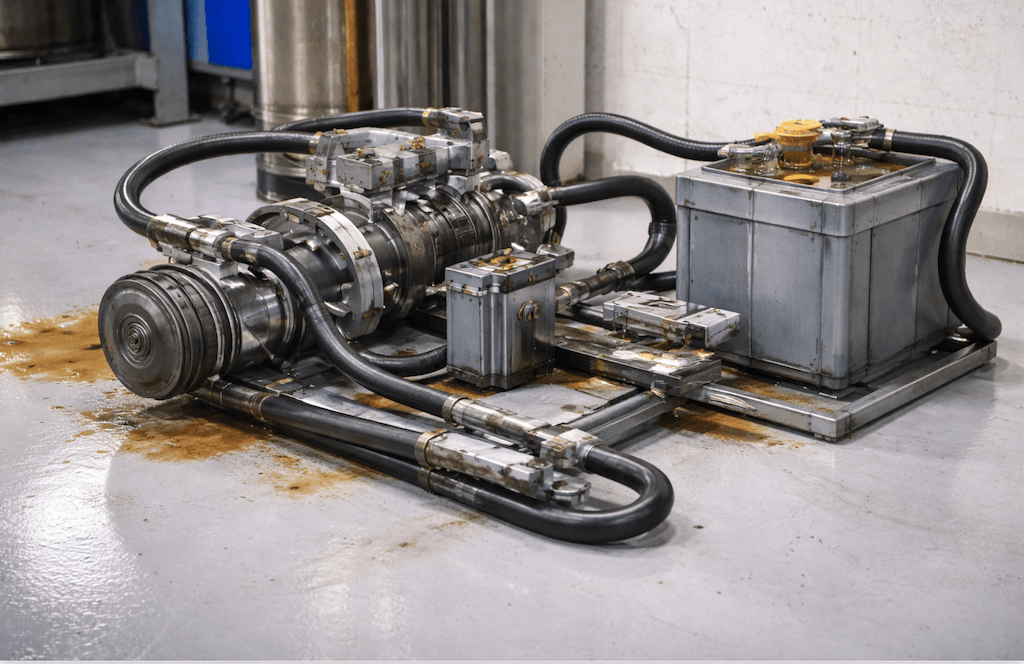
A waste of our hydraulic fluid and a safety problem are what we have if our hydraulic fluid leaks out of our equipment. What’s most important to know about hydraulic fluid leaks is that if our hydraulic fluid leaks out of our equipment, something is wrong.
Leaks caused by an outside source are obvious, like water building up on our equipment or hydraulic fluid building up on our hoses or equipment. Leaks caused by an inside source are not as obvious, like decreased efficiency or slower cycle times or increased temperatures without fluid leaks. These leaks from an inside or an outside source will result in inefficiency and will eventually result in the complete failure of our hydraulic system.
Troubleshooting hydraulic system problems in the case of leaks requires a methodical approach: determining the cause of our hydraulic fluid leaks and correcting it will require that we check all of our hoses, fittings, seals, and cylinders. This will keep future problems at bay by tightening connections, replacing seals, and using better quality parts. Correct leaks right away, and we are avoiding future problems.
4. Abnormal Noises
Our hydraulic equipment should not make unusual noises like whining, banging, or knocking noises. The cavitation may make the pumps produce knocking noises. The noises are produced by the collapsing vapor bubbles within the pumps. The problem occurs when the pumps lack adequate fluids, and the fluids might be lacking due to a blocked suction line or filter.
Elsewhere, the pumps produce a whining or whirring noise when air enters the system. The two problems are very detrimental to the pumps as they cause damage. Once the symptoms of the two problems occur, we check the inlet strainers, suction line, and the fluids within the pumps. We do this to prevent the destruction of the pumps, which might be very costly.
5. Component Wear
Every system, no matter how well it is maintained, will eventually show some symptoms of wear. The pumps, seals, valves, and cylinders, no matter how well they are constructed, will eventually wear out, and friction will get the better of them. The wear might occur in many different ways, depending on the system. The high-pressure components, for example, will wear out faster, especially if they get contaminated. The preventative replacement of the components, depending on the manufacturer’s recommendation, ensures that our systems run smoothly and efficiently.
Keeping Your System Healthy
We keep a watchful eye open for signs of overheating, contamination, leaks, unusual noises, and wear within the components of the systems to ensure that the systems do not malfunction. Malfunctions within the hydraulic systems rarely occur without some symptoms beforehand, so let Coastal Hydraulics look for the subtle signs in your equipment!
Wayne Rodick is the owner and founder of Coastal Hydraulics, a company built on the principle of “Speed to Recovery.” A U.S. Navy veteran, Wayne developed extensive hydraulic expertise while maintaining F-18 fighter jets, where precision, reliability, and rapid service were critical. Today, he brings that same commitment to excellence to the hydraulic repair industry, leading a team dedicated to delivering fast, dependable repairs that minimize downtime and keep equipment operating at peak performance.