
Last Updated on June 23, 2026 by Wayne Rodick
Hydraulic systems are used in many industries, but if they break down, production grinds to a halt. Of course, revenue begins to fall with a stop in production, and in most cases, time is of the essence. On the one hand, a hydraulic system is simple in principle because it involves the transmission of pressure in a contained fluid. However, when dealing with hydraulic systems, a number of variables come into play, which makes it rather complicated when they need repair.
If your equipment is offline, and you require urgent assistance, contact Coastal Hydraulics now for experienced support. Let’s consider the art of troubleshooting hydraulic systems!
Introduction to Hydraulic Systems
Fundamentally, a hydraulic system is a function of pressure and fluid flow. The fluid in this case is created through the pump, and any resistance in this fluid creates pressure. When these two elements work in perfect sync, you get massive amounts of power and accuracy. Unfortunately, these systems are very delicate. One failing part can start a chain reaction in other components of a machine. The key to troubleshooting hydraulic system problems can be found in many years of experience and learning.
Identifying Common Problems
Generally, you can tell something is amiss before your machine goes all the way down. Typically, we advise our clients to listen to their machine because unusual sounds will generally indicate a problem. Usually, a screeching or whining sound can readily be attributed to a problem with aeration or cavitation, implying air in your system or a pump starving for fluid.
For anyone troubleshooting hydraulic systems, excessive fluid temperatures are another serious warning symptom. If your fluid gets too hot, it will become less viscous, resulting in a compromised lubrication system and short lifespan of your seals. Slow performance is another common symptom, which in most cases may attribute to leaks or a worn-out pump which can no longer keep up with your fluid pressure requirements.
Tips for Long-Term Reliability
The most effective way to address a hydraulic problem is to simply avoid having it in the first place. Contamination is the leading culprit in ruining hydraulic parts. Dirt, water, and metal can cause immediate destruction of pumps and valves. Our advice is to set up a rigorous fluid maintenance plan. It is important to change your filters frequently and have your oil tested for cleanliness and degradation.
What’s more, maintaining a clean exterior in your fluid reservoir will help keep dirt out when maintenance is being performed on your hydraulic system. Also, a weekly check of your hydraulic hoses for wear or leaks will help prevent a hydraulic blow-out from occurring.
Modular Circuit-Level Troubleshooting
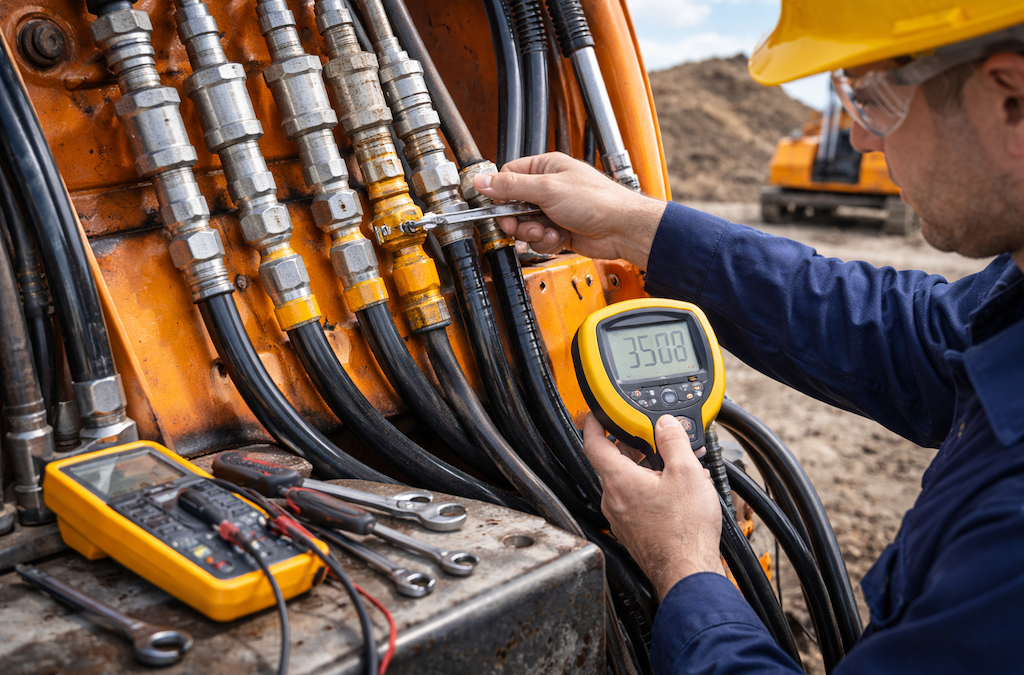
In cases where the basic tests do not show the problem, we proceed with advanced hydraulic system troubleshooting techniques. To complete this stage, we will use a flow meter and pressure gauges. Our first step will be to check the prime mover to confirm if it is rotating at the right speed for the shaft of the pump. Secondly, we shall check the pressure relief valves. Here, if the relief valves are stuck in an open position, fluid will bypass the valves and return to the tank, hence developing a pressure of zero. Then, we conduct bypass tests to check for any leakage in the seal.
Getting Your System Back Online
Troubleshooting can be a frustrating but important part of maintaining your fluid power system. Patience, proper tools, and a good understanding of fluid power fundamentals can make a big difference in your troubleshooting successes.
Of course, safety always takes priority. Never attempt to tap a line that is pressurized, and never use your hands to check for pinhole leaks. Simple troubleshooting may be simple, but find nothing, and it may be time to call a professional repair service such as Coastal Hydraulics!
Wayne Rodick is the owner and founder of Coastal Hydraulics, a company built on the principle of “Speed to Recovery.” A U.S. Navy veteran, Wayne developed extensive hydraulic expertise while maintaining F-18 fighter jets, where precision, reliability, and rapid service were critical. Today, he brings that same commitment to excellence to the hydraulic repair industry, leading a team dedicated to delivering fast, dependable repairs that minimize downtime and keep equipment operating at peak performance.